


.png)
Online gaming has traditionally rested on a relatively simple objective to persuade players to return. The technology behind that proposition is becoming considerably more sophisticated. Behavioural data, algorithmics, gamification and increasingly connected product systems are giving operators a much more detailed understanding of how individual players interact, and far greater ability to shape the experience around them.
The shift is already visible. Research published by iGX found that 61 percent of surveyed iGaming organisations deployed generative technology to enhance player personalisation, with the remainder planning to do so. Among those already using the technology, applications range from personalised promotions to predictive analytics.
For Yoel Zuckerberg, Chief Product Officer at Soft2Bet, however, the more interesting question is what operators choose to do with that capability. He explains how the next phase of player experience will be defined by companies creating products that feel relevant, familiar and worth returning to beyond the wager itself.
That brings harder questions. Greater personalisation brings greater responsibility; the ability to understand and engage a player more precisely also requires knowing when not to engage. Academic research has started to examine how algorithmic personalisation may influence risk perception, decision-making and betting persistence, placing the relationship between technology and player behaviour under increasing scrutiny.
Ahead of the Player Experience Academy at SBC Summit 2026, Zuckerberg speaks about what gaming can learn from other industries, why familiarity matters in product design, the evolution of gamification beyond retention, and where he believes the next generation of player experience is heading.
Yoel Zuckerberg: It needs to build more around it. The wager will obviously remain fundamental to betting and gaming, but historically much of the product experience has been concentrated around a very simple sequence: place a wager, wait for an outcome, win or lose.
Digital entertainment has moved considerably beyond that kind of transactional relationship. People are accustomed to progression, challenges, achievements, interaction and experiences that continue over time.
That creates an opportunity for the iGaming industry to build another layer of value around the core product. A player might be progressing through a competition, completing a challenge or interacting with a wider experience at the same time as they are betting. That changes the relationship. Instead of asking only how we make the next transaction more compelling, we start asking what makes somebody want to return to the experience itself.
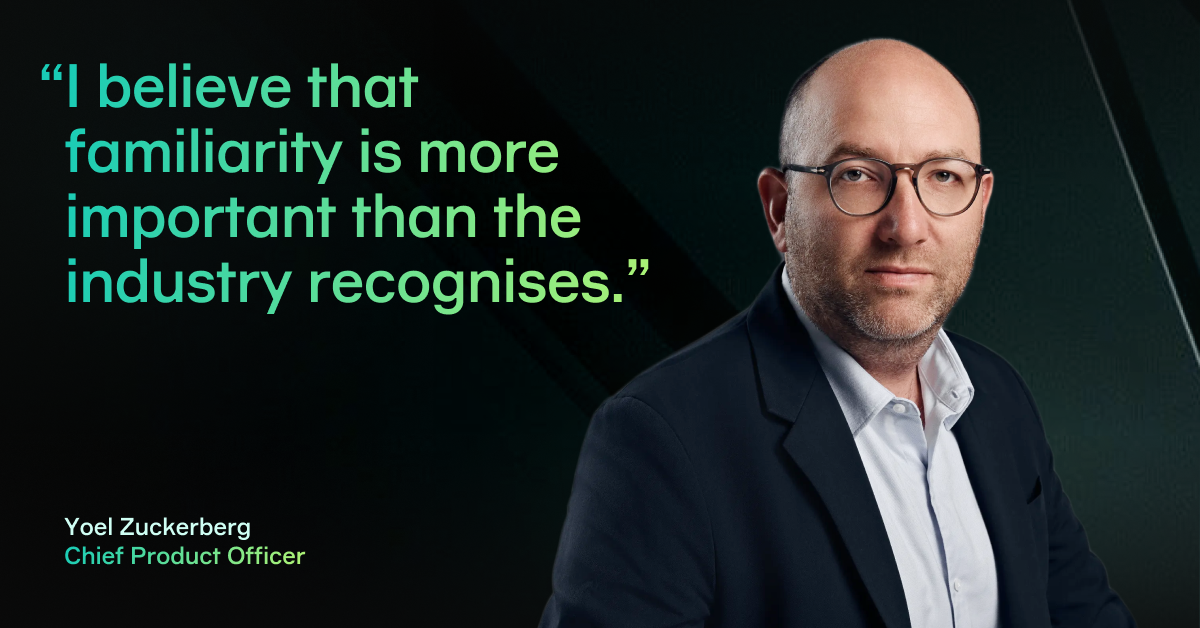
Yoel Zuckerberg: I believe that familiarity is more important than the industry sometimes recognises. Innovation does not necessarily mean asking the player to learn an entirely new behaviour.
Some of the most successful entertainment products begin with something people already understand. Monopoly is a good example. Football Manager is another. They carry memories, behaviours and associations that already exist before somebody opens the product. That immediately removes a degree of friction. There is an interesting product principle in that. Technology can become considerably more sophisticated behind the scenes while the experience presented to the player becomes simpler and more intuitive.
For me, the opportunity is not to reproduce experiences from elsewhere, but to understand why they work. What does the player recognise? What feels instinctive? What gives them an immediate sense of where they are and what they can do?
The best innovation does not always feel new to the person using it. Sometimes it feels strangely familiar.
Yoel Zuckerberg: Absolutely. Personalisation should ultimately be about relevance, not simply targeting.
The industry has become very good at using data to determine what somebody might click on, play or respond to next. But that is only one dimension of personalisation. The more interesting question is whether the overall experience feels right for that individual.
Different players value different things, but even that is only part of the equation. The same player will not necessarily want the same experience every time they interact with a product.
Time, circumstance and context matter. Someone may behave differently on a Saturday evening than they do on a Tuesday afternoon. Their mood may be different, their motivation may have changed, or something that happened earlier that day may influence what they are looking for from the experience.
That is where personalisation becomes much more interesting. It is not simply about building a profile of a player and assuming that profile remains static. People are not static. Their preferences and behaviours change according to context.
The next generation of personalisation therefore needs to understand not only who the player is, but what may be relevant to that player at that particular moment. That requires a much more sophisticated understanding of behaviour and, equally, careful thought about how that understanding should be used.
We must get that right because this is when personalisation will move beyond optimisation.
Yoel Zuckerberg: Potentially very significant, because entertainment is rarely only about the content itself. It is also about participation and connection.
You can already see this across gaming, sport and entertainment more broadly. People want to compare, compete, share, follow progress and feel that they are participating in something rather than simply consuming it.
iGaming has traditionally been quite individual and transactional. Social mechanics give us the opportunity to think differently about that relationship.
But there is no universal model. Social behaviour varies enormously between players, demographics and markets. Some people want competition and visibility; others want a much more private experience.
That is why I see social functionality and personalisation becoming increasingly connected. The objective should not be to make every product more social. It should be to understand when social interaction adds genuine value to a particular player’s experience.
Yoel Zuckerberg: I think gamification is still widely underestimated in its role. We saw a market opportunity, and that’s how MEGA (Motivational Engineering Gaming Application) was born. We realised that standard retention tools were falling short, so we engineered a gamification engine designed to transform passive players into loyal users and actively drive operator revenue.
A school of thought still persists in parts of the industry that treats gamification as something superficial, reduced to points, badges and leaderboards layered on top of the product.
In today’s iGaming systems, gamification is not a feature layer. It is embedded into the infrastructure itself. We are talking about progression economies linked directly to betting, mission-based engagement loops, tiered loyalty systems calibrated to activity frequency and real-time rewards.
These mechanisms are often driven through the same behavioural CRM systems that process wagering activity, effectively merging engagement design and monetisation logic into a single operational layer.
From my perspective, these are not decorative mechanics. They are structural systems designed to shape how users interact with the product over time. Users are no longer participating in isolated transactions. They are progressing through systems with multiple layers of engagement. And that distinction is still materially underestimated in how the industry understands what is actually being built.
Yoel Zuckerberg: The early results showed us that tournament-led gamification can strengthen sportsbook engagement by giving players another reason to interact with the brand beyond the bet itself.
MEGA Shoot gives players a football game that they can understand quickly, with head-to-head competition tied to the sport they already follow. The format is direct and familiar: players choose where to shoot, take their turn in goal and continue the shootout.
What was particularly encouraging was the level of repeat engagement. We saw almost 32 percent engagement among active players, with around 71 percent of MEGA Shoot players going on to play a second match. The early data also showed a 13.5 percent uplift in retention.
For me, that demonstrates the value of creating an experience that fits naturally around what players are already interested in. Instead of relying only on the sportsbook activity itself, gamification can give players another reason to stay active throughout a major sporting event and return to the product.
Yoel Zuckerberg: I believe the key is making player protection part of the product itself and connecting it across the customer journey.
Today, player protection touches almost every part of the experience, from advertising and payments to identity checks, CRM, customer support and the moment a bet is placed. For that to work effectively, these teams need to work from the same information. When one team identifies a risk, that information needs to reach everyone handling the account, and any action needs to be reflected across the account, CRM activity and support record.
From a product perspective, connected systems can make this much easier. A risk signal can be used alongside the wider account history to support a proportionate response, rather than automatically triggering the same action for everyone. It can also help reduce unnecessary manual checks and avoid situations where one part of the business responds to a risk while another continues as normal.
I also think this becomes particularly important as requirements evolve across different markets. Operators need to be able to make a change once and have it carried across every team and system that needs it.
Ultimately, the player experience should remain simple, but behind that experience the product needs to make sure that protection decisions are applied consistently and quickly across the entire journey.
Yoel Zuckerberg: I would pay very close attention to the convergence of behavioural data, AI, personalisation and product orchestration.
For a long time, the industry built products in relatively separate layers: sportsbook, casino, CRM, loyalty, payments, responsible gaming and customer support. Increasingly, those systems are beginning to communicate and respond to the same player in real time.
That creates a much bigger opportunity than simply automating existing processes. It allows us to think about an experience that changes according to the individual, what they enjoy, how they interact, where they are in their journey and, importantly, when the product should engage and when it should step back.
The challenge is that greater technological capability also creates greater responsibility. Just because we can personalise something does not automatically mean that we should.
I think the people who will shape the next generation of this industry will be those who understand both sides of that equation: what the technology makes possible and where the boundaries should sit. That combination of product thinking, human behaviour and responsible innovation is where some of the most interesting work is going to happen.
Yoel Zuckerberg: I want us to broaden the way we think about player experience. Too often, the industry discusses it through individual functions such as product, CRM, gamification, responsible gaming and technology, when the player experiences all of those things as one relationship.
The Academy is an opportunity to bring those perspectives together and ask some bigger questions. What makes an experience genuinely enjoyable? Why do certain products feel immediately familiar while others create friction? What can gaming learn from other industries? And as personalisation and behavioural technology become more sophisticated, where should the boundaries sit?
There will not be one answer, because players, markets and regulatory environments are different. That is precisely why the discussion matters. For me, the Academy should challenge some established assumptions about engagement and look at player experience much more broadly, as a combination of technology, entertainment, human behaviour and responsibility.
Yoel Zuckerberg: I would like people to leave with questions they can apply to the decisions they are making every day.
If you work in product, are you designing around what the technology can do, or around what genuinely improves the player’s experience? If you work in CRM or marketing, are you measuring engagement simply by activity, or are you thinking about the quality and sustainability of that relationship? And if you are building increasingly sophisticated personalisation, are you equally clear about when to engage a player and when not to?
The Academy brings together people who approach these questions from very different perspectives, and that is important. The objective is not to present one model and say this is the future of player experience. It is to give people new ways of thinking about their own products, their players and the decisions they make when they return to work.
If somebody leaves the room questioning an assumption they previously took for granted, or seeing an opportunity they had not considered before, then the Academy has done something valuable.
Join Yoel Zuckerberg and an elite line-up of world class experts to rethink where Player Experience goes next. With 65 percent of tickets already sold, secure your place at the Player Experience Academy.
.svg)
.svg)



.png)


.png)
.png)
.png)