


.png)
Players are more likely to return to a brand when they remember a positive experience. Ideally, they can find their favorite content easily and understand what a reward requires before choosing to take part. When players return to a challenge, seeing what they have already achieved can help them pick up where they left off.
For operators, the commercial opportunity lies in building that relationship with each visit. The experience needs to keep meeting players’ expectations if they are to choose the brand again. That makes iGaming player retention a responsibility for the teams developing the product as well as those promoting it.
Soft2Bet’s approach builds on that initial relationship through MEGA, the company’s standalone gamification solution. Product teams can use its gamification engines to introduce missions, achievements, longer-term progression and reward-based challenges across visits.
As operators learn more about player behavior and preferences, they can adapt the experience for different audiences. MEGA operates within the Soft2Bet Engagement Ecosystem, which connects the gamification tools with the technology used to run the full casino or sportsbook operation.
Soft2Bet’s ecosystem can help make a brand part of a player’s regular entertainment routine. One customer might return to follow a favorite football competition, and another might resume an ongoing casino challenge.
The same approach will not suit every audience because players don't all interact with a platform the same way. A casino-first customer may expect something different from a frequent sportsbook user, and changes in personal circumstances may call for a different approach.
A connected player journey should keep the messages a customer receives consistent with what they find on the platform, so someone who accepts an invitation gets the experience they were led to expect.
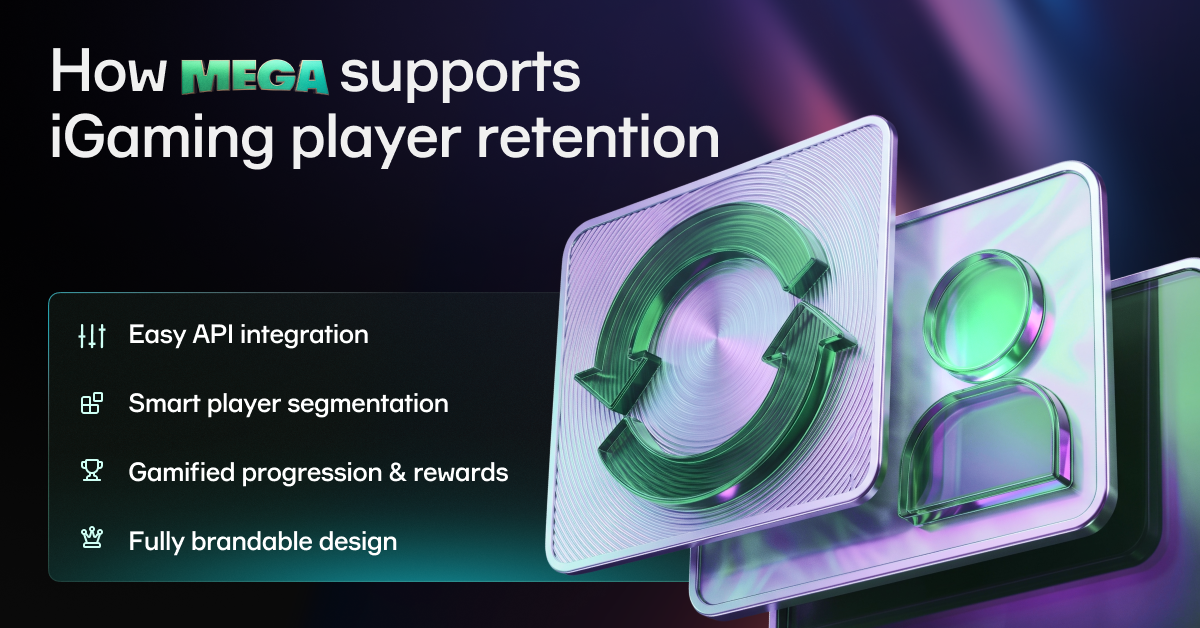
MEGA gives casino and sportsbook operators control over how rewards work and which activities appear for different player groups. It integrates through an API, allowing them to add the technology to an existing casino or sportsbook without changing platform providers.
Behavioral segmentation uses player activity data to group customers by how they play. From there, the settings can determine which groups receive a challenge, what players need to do to earn a reward and how progression works. These conditions can be reviewed before launch so the rules for taking part are clear from the outset.
One example of the model in action is MEGA Builder, which uses a sports theme for its progression system. Players collect points through casino play or sports bets, then use those points to restore sportsgrounds and unlock virtual cities. Rewards appear at milestones along the way, helping the building theme connect separate interactions into a continuous story. Players can see what they have already built and what comes next, so each visit continues from the progress they made previously.
MEGA also lets operators shape the experience around their casino or sportsbook identity. They can adapt the design and player journeys to reflect their brand’s look and tone. Returning customers can recognize the setting and see how their earlier activity fits into the experience.
Casino player engagement can be adapted around how different customers prefer to take part. Someone who enjoys following their progress over several visits may prefer an ongoing story; another customer may opt for a simpler activity with an outcome they can understand straight away. MEGA’s range of engines lets each brand choose a format that suits its audience and adjust the settings to match how that group plays.
The same principle applies to sportsbook player engagement, where the starting point can be the competitions or teams a customer already follows. Based on that information, an operator could build the experience around the player's existing interests and schedule activity around relevant fixtures. The challenge itself can still be tailored separately, since following a team or competition does not mean the player wants a more demanding experience.
MEGA also offers localization, making the experience better suited to each audience and adaptable across different brands and markets. The language and presentation can be adjusted for each market, with local sporting interests reflected where relevant. Each localized version runs on the same underlying technology, while the brand can still adapt its identity to match the audience.
Tailoring the experience in this way can support player lifetime value in iGaming by keeping players interested over time and reducing reliance on one-off promotions. Operators still need to know, however, whether that interest continues after the initial campaign ends and how much it costs to sustain.
MEGA’s analytics and segmentation tools help teams compare how different audiences take part and see where participation drops. Results for individual player groups give teams a better basis for adjusting a challenge or reward than a single overall participation figure. Looking at reward costs, changes in spending, repeat participation and challenge completion can show whether interest lasts and remains commercially worthwhile.
Once a campaign is live, teams need to keep checking whether it suits the players it was designed for. If participation drops or behavior changes, teams can use that information to make refinements. Staff managing the experience and customer relationship should then make sure those changes are applied consistently.
A player encounters a brand as one service, even when several teams share responsibility behind the scenes. An offer should mean the same thing in a promotional message as it does on the site, with clear conditions throughout.
For a promotion tied to a football match, the team might email customers who qualify for the offer. The message should explain the reward and what players need to do to earn it, then link to the promotion on the site. Before sending the email, the team should follow that link and check that the page shows the same offer and conditions.
The team should also check how the offer appears on a phone, where limited screen space can make the conditions harder to read. Players should be able to understand the offer, track their progress, and reach their account controls as easily as they would on a larger device.
Soft2Bet brings casino, sportsbook and mobile apps onto the same core system, alongside the tools used to run the business. These include its content management system (CMS), customer relationship management (CRM) software, and know-your-customer (KYC) and anti-money-laundering (AML) tools.
Soft2Bet’s proprietary CMS and backend give operators control over content and operations. The same setup provides access to configurable journeys, promotion automation, segmentation and reporting.
For businesses assessing turnkey iGaming solutions, the CMS handles on-site content, including multilingual versions and brand-specific themes. CRM manages communications and links campaigns with bonus management and customer data. Segmentation helps determine which audiences receive each message, with these functions available through one technology partner.
Zinx, Soft2Bet’s Romanian casino and sportsbook brand, shows how the connected setup can work in practice. Its purple dragon mascot appears throughout the site, giving the brand a distinctive visual identity. The platform’s launch also brought in MEGA Round, a prize wheel where players earn spins through deposits and can receive randomized rewards.
At Zinx, the dragon mascot helps customers put a face to the name across casino and sportsbook, with MEGA Round’s prize wheel forming part of the brand experience. Its reward conditions should be clear wherever the feature appears.
In Sweden, Soft2Bet’s Viking-inspired casino and sportsbook Lodur brings its theme into the gameplay through MEGA Islands. Players earn resources through social casino play and use them to build and upgrade their island settlements. They can also raid other islands and defend their own, with progress carrying over between sessions so they can pick up where they left off.
A brand may have earned a player’s trust over several visits, but maintaining it calls for recognizing when the usual approach to engagement is no longer suitable. How the business responds to changing circumstances becomes part of that relationship.
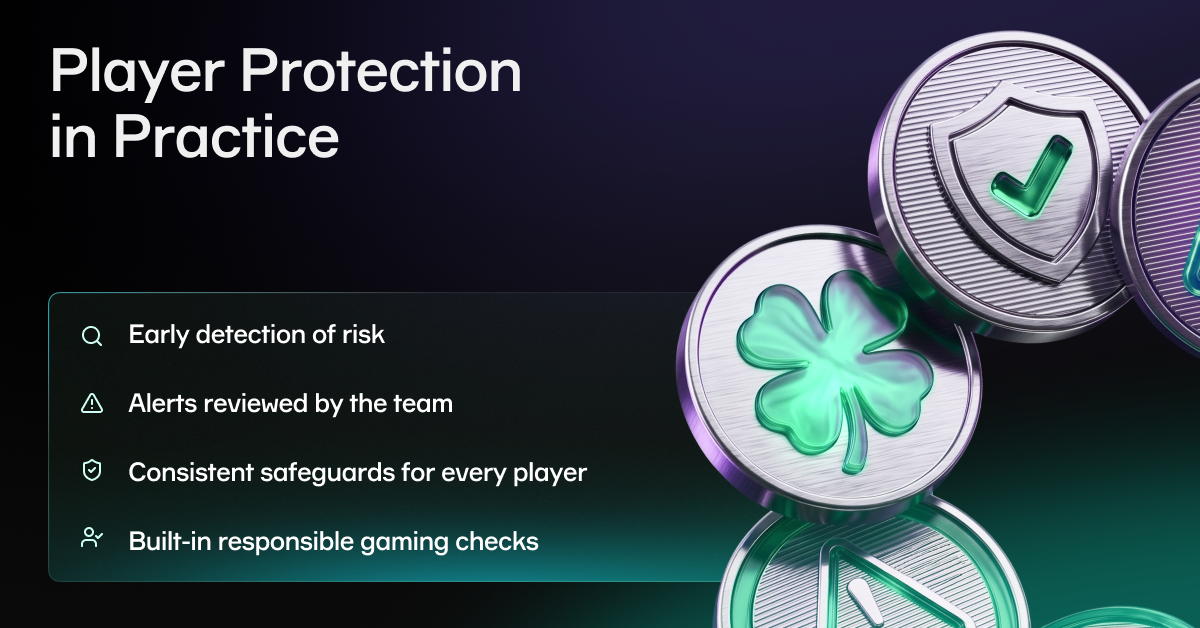
Behavioral segmentation helps operators understand players’ interests and how they use the product. The same information used to personalize an offer may also raise concerns about unusual play, sudden changes in spending, possible financial distress or signs of losing control.
These signals should always reach reviewers trained to recognize risky behavior. They can assess the customer’s situation and decide on an appropriate response. Commercial value should have no bearing on the level of protection a player receives.
A responsible gaming framework should set out when promotional activity needs to change or stop and who is responsible for following up. The teams involved in player management need to understand those rules. Product settings can help teams carry out those actions, but the operator must still decide what is appropriate and check that the changes have been made.
Soft2Bet’s gamification system includes configurable eligibility controls and spending limits, with built-in responsible gaming checks. These controls can be reviewed during campaign setup to see how they apply to the intended audience.
A recreational casino user who visits occasionally may prefer a simple experience that is easy to return to after a break. Challenges that let players make progress at their own pace could suit that pattern. Where the product allows, progress could remain intact during a break, so the player doesn't feel pressured to return just to avoid losing what they have already completed.
That balance can be lost if reminders become too frequent or the player is given too little time to complete an activity. Casino player loyalty strategies designed to bring customers back should fit the audience’s normal participation patterns and leave room for someone to take a break before completing an activity.
The same approach would look different for a highly engaged sports bettor. An operator could organize content around the competitions they follow and time communications around fixtures they are already interested in. A player’s interest in a sport can guide the content they see, but it should not be taken as a sign that they want to bet more often.
The amount of contact also needs to be considered alongside the content itself. One email or app notification may be appropriate, but messages across different channels should be coordinated and proportionate. Personalization should take into account how often a customer is contacted, as well as what the message is about.
If signs of risky behavior begin to appear, the response needs to change again. Depending on the assessment, an operator could reduce or stop promotional contact, withdraw offers linked to deposits, pause certain engagement activity and direct the player towards appropriate support or account controls. Trained staff can then decide what further action is needed under the company’s procedures.
Player risk profiles should also help determine which offers a customer receives. A customer excluded from a promotion must not keep receiving it through another channel simply because they remain commercially valuable. The teams managing the site, app and customer communications need to make sure the restriction is applied consistently.
A player’s circumstances can change over time, and someone whose betting previously raised no concerns may later need support. High engagement on its own does not establish a level of risk. Any reassessment should consider what has changed for that person, using current information rather than relying on the group they were placed in for an earlier campaign.
Gamification raises questions about the relationship between loyalty and expenditure. A reward can be non-monetary and still require additional gambling to earn it. For example, a badge that requires a certain amount of wagering is still tied to spending, unlike recognition given without a deposit or wagering requirement. The activity required to earn a reward deserves as much attention as the incentive itself.
MEGA Builder links progress to casino play or sports bets, Zinx’s use of MEGA Round links spins to deposits, and Lodur’s MEGA Islands turns betting activity into resources that players can use to build and upgrade their islands. These requirements should be considered when evaluating how each feature affects participation.
An operator seeking loyalty without encouraging greater spending could consider optional activities that do not require a bet, or recognize achievements without setting a spending target. Letting players keep their progress during a break could also reduce pressure to complete a challenge immediately. These options would depend on what the chosen engine supports and market requirements. Their effect on customer spending would still need to be measured.
Replacing a monetary bonus with a badge or status marker does not remove the need to intervene when a customer is at risk. Sustainable player engagement must allow an operator to end promotional invitations altogether, even when the campaign is otherwise performing well commercially.
Player protection needs to be considered during product development as well as campaign review. Soft2Bet’s configurable rewards and audience settings give partners control over how they apply engagement.
Sustainable player engagement stems from using the available settings in ways that suit the customer and adjusting the approach when their behavior or circumstances change.
Soft2Bet’s Player Experience Academy returns to SBC Summit Lisbon on September 29, 2026, bringing senior industry leaders together to explore personalization and retention, as well as how behavioral design can work within regulatory and player-protection requirements.
The program allows operators and other industry professionals to compare approaches to player engagement and responsible gaming, including how they use the behavioral information available to them.
Soft2Bet CPO Yoel Zuckerberg will deliver a keynote on the future of player experience, while CCO Andrew Cochrane will join Casumo CEO Francesco Postiglione and Scatters CEO Chris McGowan to discuss retention and responsible engagement. Harrison Barrett, Soft2Bet’s VP of Business Development, and G Gaming CCO and Co-Founder Helen Walton will also lead an interactive workshop on different player behaviors, motivations and risk profiles.
As operators gain access to more detailed player data, will competitive advantage come from maximizing attention, or from knowing when not to pursue it?
What is Soft2Bet’s Engagement Ecosystem?
Soft2Bet’s Engagement Ecosystem connects MEGA gamification with the technology and operational tools used to run casino and sportsbook brands.
How does MEGA support iGaming player retention?
MEGA uses missions, achievements and ongoing challenges to help players build on their progress across visits.
Can MEGA integrate with an existing iGaming platform?
Yes. MEGA integrates through an API, allowing operators to add gamification without changing their casino or sportsbook platform provider.
How can operators personalize player engagement with MEGA?
Operators can tailor challenges and rewards to different player groups, with localized language and design that reflects each brand.
How does MEGA support responsible gaming?
MEGA includes configurable eligibility controls, spending limits and responsible gaming checks. Operators must still assess risks and decide when to intervene.
.svg)
.svg)



.png)


.png)
.png)
.png)