



Choosing an iGaming operating model means deciding which technology and day-to-day responsibilities the business wants to keep in-house, how much it is prepared to invest, and where a platform partner should take responsibility. That decision affects how freely the operator can change the product, enter additional markets and adjust the setup as the business grows.
A brand can launch successfully and still outgrow the arrangement that brought it to market. The limitations usually become apparent when the operator needs localisation services, wants greater control over CRM or product development, plans to enter a new market or decides to bring a third party-managed function in-house.
Building and owning the platform creates a different commitment. Direct control over the technology comes with responsibility for engineering, security, infrastructure and support. These costs continue after launch because the platform must be maintained, updated and adapted to new statutory and operational requirements.
The available routes extend beyond a choice between a white label arrangement and full platform ownership. A turnkey platform can give the operator greater control over its brand and commercial operation without requiring it to build the core technology. A modular partnership can add or replace selected services while allowing the rest of the operation to remain in place.
The division of responsibility will differ from one business to another. A new brand may favour lower initial investment and a shorter implementation period. An established operator may need to replace a restrictive Player Account Management system, improve its use of CRM or enter another jurisdiction without disturbing technology that still performs well.
Soft2Bet starts each partner discussion by reviewing the operator’s licences, current technology, target markets and internal teams. This helps determine whether the project should cover a full platform, a staged migration or a standalone integration.
A media company with a large audience will assess the choice differently from a gaming group with its own product, governance and engineering teams. These priorities would shape the initial arrangement and the flexibility it provides the business to expand its product, team and market coverage.
For a business testing demand, a white label arrangement can reduce the investment and operational preparation required before launch. The provider supplies the core platform and manages the necessary supplier connections, leaving the partner to concentrate on the brand, acquisition and its initial commercial plan.
The lower technical burden allows a company to test whether the proposition can attract players before recruiting a large product and engineering team. During that period, the business can assess acquisition costs, player behaviour and market performance without committing the capital required for a more independent operation.
Soft2Bet recommends setting a clear objective and review point before a white label project begins. This gives the business time to assess demand and market economics before deciding whether greater control justifies the additional cost and responsibility.
The limits stem from the standardised setup required for a provider to support several brands through the same systems and operating processes. This can reduce the operator’s freedom to make changes to design, payments, promotions, reporting, CRM and the product roadmap. Operating on a standardized platform means your specific product requirements are subject to the provider’s broader roadmap, which can delay critical commercial initiatives.
The restrictions become harder to accept once the brand needs to stand apart from competitors. In a crowded market, aligning with local preferences and communicating more effectively with players can improve conversion and retention. The operator may also need direct access to its data or the freedom to work with suppliers beyond the white label arrangement.
A short-term test can continue after the reasons for choosing it have changed. As the business grows, the contract and technology may still reflect what the brand needed before launch. By the time the restrictions become clear, leaving the setup may involve player data, reporting records, supplier relationships and an active customer base.
Exit planning should be covered in the first contract, including ownership of assets, data portability, migration support and the likely timescale for a future move. Entering the market sooner offers less value if leaving the arrangement later requires a lengthy and disruptive migration.
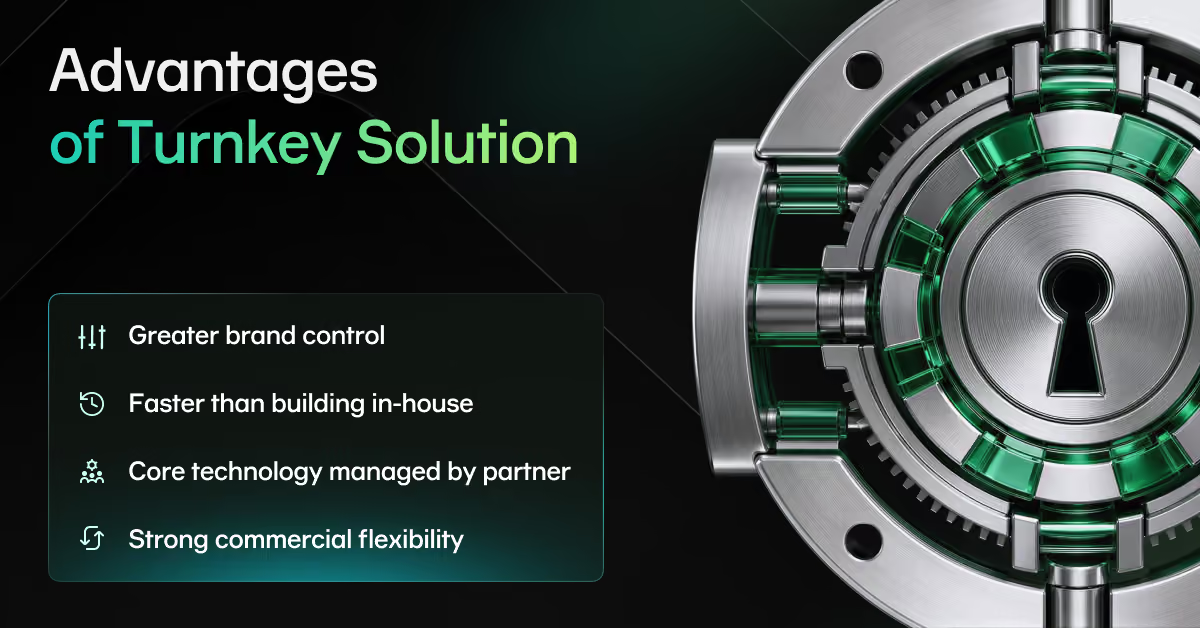
The term “turnkey platform” is used in several ways across the industry, which can make comparisons less precise. In most arrangements, the operator has not built and does not own every part of the core technology.
The platform provider supplies and maintains the technology, while the operator runs its own brand and commercial activity. The agreement defines how licensing and operational duties are divided in the relevant market. The setup may include Player Account Management, casino, sportsbook, CMS, CRM, payments, reporting, KYC, AML, risk controls and responsible gaming tools.
With the technical base in place, product teams can shape the brand, content mix, campaigns, player communication and market strategy without first building the technology organisation required to support the platform.
A turnkey approach allows operators to separate platform delivery from brand control. While the core platform provides the technical foundation, the design, content presentation, campaigns and player experience can be configured to meet the news of the individual markets and players.
The arrangement preserves the parts of the product that define the brand without asking the operator to build and maintain the core technology. It is relevant to media companies, land-based groups and licensed operators that already understand their audience and want to keep their internal teams focused on commercial delivery.
Before committing, the operator should establish exactly how the arrangement will work. Due diligence needs to go beyond feature lists and cover what the product team can change directly, which requests enter the provider’s development queue, how data is accessed and who owns an integration when it fails. Release schedules, incident response, security duties and migration rights deserve the same attention as the player-facing product.
Working with one main partner can simplify accountability, provided the agreement is clear. A delayed release or failed supplier connection can affect commercial performance and statutory obligations. Service levels should state how incidents will be acknowledged, escalated and resolved, with a direct route to the team responsible.
Under a turnkey arrangement, the operator controls the brand and day-to-day commercial activity, and the provider carries the core technical operation. The model becomes restrictive when the provider’s roadmap, configuration options, integration constraints or service model start to dictate the pace of the business.
Direct ownership gives the operator authority over the roadmap, data, back office and integrations. That can be valuable when technology is central to the company’s competitive position, but the value depends on what the business can do with that control.
Soft2Bet develops and maintains its Player Account Management (PAM), sportsbook, CMS and MEGA technology within one core. That ownership gives the company direct control over product releases and market configuration. An operator should take on the same responsibility only when it will materially strengthen the product or its economics.
Building the platform is only the first part of the commitment. Running it requires dedicated teams and ongoing investment across engineering, quality assurance, hosting, security, incident response, app releases and technical support. Mandatory changes can affect different areas, including account controls, payments, reporting, bonuses, KYC, AML, responsible gaming and tax treatment, so each update must go through the full development process without disrupting the live product.
External supplier management remains part of the operation. Owning the infrastructure code does not bring casino content, sports data, payment processing, identity checks or other specialist services in-house. Internal teams remain responsible for those relationships and for keeping each integration working.
The platform must also support markets that were not part of the original build. If every new jurisdiction requires major redevelopment, the operator has created an internal bottleneck. A growing backlog can delay commercial changes as much as an external provider’s release queue.
Ownership is commercially worthwhile when it produces faster releases, proprietary features, stronger use of data or valuable technical intellectual property. The business also needs the scale and organisational capacity to maintain the platform over time. Without that capacity, ownership simply moves the dependency and backlog in-house.
Most established operators do not need to replace everything because the problem is often confined to one part of the operation. A legacy PAM may slow product releases, CRM may give commercial teams too little control, and payments or reporting may involve too much manual work. The casino and sportsbook may perform well, yet the brand may still lack the engagement tools needed to encourage repeat activity.
That weak point should define the first stage of the project. Soft2Bet may support a broader platform migration or begin with a standalone integration. MEGA is a standalone gamification engine that integrates through APIs, allowing casino or sportsbook operators to add advanced player experience capabilities without changing the platform already in use.
Technology that still performs does not need to be discarded because another part of the operation has reached its limit. Therefore, investment can be directed towards the system creating the delay, cost or loss of control.
Staging the work can also reduce pressure on the live business. Moving every player record, supplier connection, product and internal process in one release creates concentrated operational risk. A phased migration gives teams time to test data, confirm reporting, train staff and resolve integration problems before more traffic or responsibility moves across.
A staged migration still needs a clear destination and a plan for removing temporary connections. Without one, a six-month connection can easily become a permanent fixture, creating unnecessary dependencies and complicating future updates.
Supplier selection requires the same care. A modular setup should operate as one connected system rather than a collection of contracts. Adding vendors without a clear design creates more support queues, data mapping and integration work, leaving the operator with the fragmentation it was trying to remove.
Avoiding that outcome depends on stable APIs, shared data rules and clear responsibility. If a payment, account update or risk decision fails, the operator should be able to identify the team responsible for resolution and contact them directly. Separate services still need one point of coordination.
Connected services must act on the same account information. Player status, payments, CRM, risk, reporting and product access cannot operate from conflicting records.
A player-protection decision may affect marketing eligibility, deposits, withdrawals, customer support and account access. Each team should see the latest status without relying on separate manual updates, and a change to player verification should reach CRM and payments immediately.
A long product list indicates to the operator very little unless the services work together properly. The operator needs to understand how data passes between connected services,, which system keeps the main record and who is responsible when a problem involves more than one service.
Soft2Bet applies the same principle whether a project covers a full turnkey platform or a single integration. PAM, casino, sportsbook, CMS, CRM, payments, KYC and AML capabilities can operate from the same core. A MEGA-only project still requires agreed data flows, service ownership and support processes. A narrower starting point should reduce complexity rather than move it elsewhere.
Each additional service should answer a defined commercial or operational need. The relationship can widen later without forcing the operator to replace technology that continues to perform.
Expansion into other markets also tests how well the services work together. Local KYC, AML, tax, payment and responsible gaming rules need to be built into the operating setup rather than added late. A common foundation can reduce repeated work, provided the configuration reflects the requirements of each market.
Soft2Bet defines each project around three requirements: solve the immediate problem, connect cleanly with the systems that remain and preserve a workable route for later change.
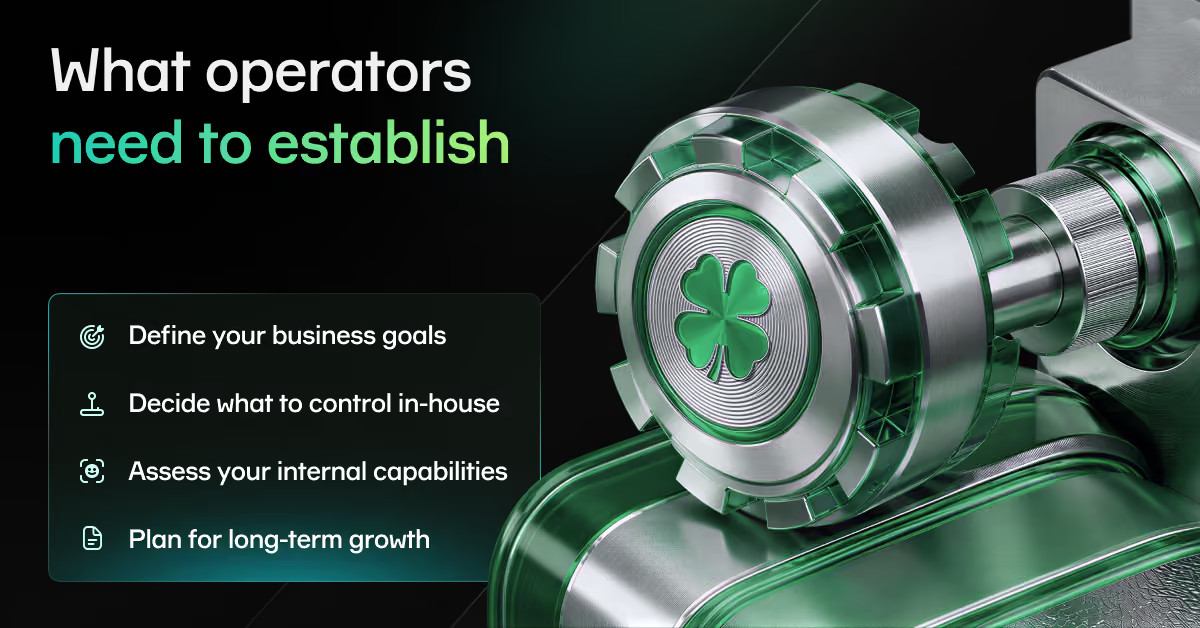
Before comparing proposals, the operator needs to define what the project must achieve. A new-market test, a platform migration and a product upgrade may involve similar suppliers, but each calls for different priorities. A test will usually favour a controlled initial cost, whereas a migration places more weight on continuity, integrations and the transfer of live data.
The deadline should be linked to a licensing milestone, market opening or another genuine business requirement. Prioritising the date over the operating requirements can leave the business with a setup that does not support the intended product.
Control becomes meaningful only when the operator identifies the decisions that must remain in-house. These may cover player data, the product roadmap, CRM, supplier selection, reporting, promotions or the user experience.
The business also needs the people and expertise to manage those decisions. Product, engineering, compliance, payments and supplier management teams must have enough capacity to carry the responsibilities created by the arrangement.
The contract must also be tested against the full life of the relationship. The opening fee and first product demonstration show only the starting position, not what the arrangement will cost or require as the business expands.
A multi-year cost model needs to include revenue share, hosting, supplier charges, development, support, internal salaries, compliance work and migration. Together, these determine the real financial commitment.
Plans for a second or third market should form part of the original assessment. The operator needs to know whether localisation will require a configuration change, a new integration or a wider rebuild, since that distinction affects cost, staffing and launch time.
Data rights, exit support and service ownership belong in the contract before launch. The operator should know what it can take with it, how long a future move may take and who is responsible when an incident crosses more than one service.
The procurement process should also examine how quickly the setup can change after launch, including the time needed to add a payment method, revise the player experience, meet new requirements or enter another market.
The operating model reveals its value once the business changes direction or scale. A new market, supplier replacement, statutory update or decision to bring a function in-house will expose who controls the product and whether the original commercial terms still suit the business.
Commercial due diligence should establish who can approve a change, how development is prioritised, how data will be handled and whether the relationship can become broader or narrower without another disruptive migration.
Soft2Bet sets the initial project around the operator’s commercial plan and the responsibilities its internal teams can carry. Further services are added only when they support a defined commercial or operational need.
A strong operating model remains workable as the operator enters another market, broadens the product and expands its internal team. The original choice has been delivered when those changes do not force another costly rebuild.
What is the difference between a white label and a turnkey iGaming platform?
A white label arrangement places more technology and operational responsibility with the provider, which can reduce the initial cost and shorten implementation. A turnkey platform gives the operator more control over the brand, commercial activity and product configuration while the partner maintains the core technology. Licensing and operational duties still depend on the market and agreement.
When should an operator consider a modular iGaming platform?
Modular delivery is useful when one part of an established operation is holding the business back and the rest of the stack continues to perform. The operator can add or replace one service, test the connection and widen the project later. It can also support a staged migration when moving the full platform at once would create unnecessary disruption.
Does modular delivery require a full platform migration?
A full platform migration is not always required. Standalone products can connect through an API, and Soft2Bet’s MEGA can be added to an existing casino or sportsbook platform without changing the current provider. A wider migration can follow later when it becomes commercially and operationally justified.
What should operators compare beyond launch cost and timing?
Operators should compare data and roadmap control, service levels, integration ownership, internal staffing, multi-market support, total cost and exit terms. They should also test how quickly the setup can support payment, product and other changes after launch.
How can Soft2Bet support different operating models?
Soft2Bet can provide a complete turnkey platform, support a staged migration or begin with a standalone MEGA integration. The initial project is defined by the operator’s current technology, target markets, internal capacity and commercial plan. Further services can be added when the operator has a defined need for them.
.svg)
.svg)





.avif)
.avif)
.avif)