
SIGMA | ROME
Play with us. Win with us.
NOVEMBER 4-6
Stand 6035
ITALY
ROME

Discover the thrill of MEGA Clawee and experience the fun first-handed at our stand

Fill in the form
Thank you! Your submission has been received!
We'll get back to you soon!
Oops! Something went wrong while submitting the form.
Back to all news

iGaming predictions for 2026: Responsible gambling, player protection and operator responsibilities

January 26, 2026
5 Minutes reading
iGaming predictions for 2026: Responsible gambling, player protection and operator responsibilities
No items found.

Redefining the igaming industry in 2026

The iGaming industry is approaching a critical inflection point. As 2026 gets underway, operators face a rapidly evolving landscape defined by changing regulatory requirements, rising player expectations, and increasing competition across global markets. Growth is no longer driven solely by acquisition volumes or promotional spend. Instead, long-term success will depend on how effectively operators integrate responsible gaming, player protection, and compliance into their core business strategies.

Global iGaming market growth, widespread mobile adoption, and regulatory expansion have accelerated market saturation. In response, regulators, players, and partners are demanding higher standards of transparency, safety, and accountability. For iGaming operators, 2026 represents a shift from short-term growth tactics to sustainable, responsibility-driven operations.

Industry outlook: market saturation and rising expectations

Increasing competition in regulated markets

Regulated iGaming jurisdictions are highly competitive as established brands, emerging operators and global platforms compete for the same players, driving up acquisition costs and reducing the effectiveness of bonus-driven strategies. Player loyalty will increasingly depend on trust, product quality and long-term engagement rather than short-term incentives.

Standardisation and the "EU Gold Standard"

While gambling remains a matter of national subsidiarity, 2025 saw the widespread adoption of voluntary standards proposed by the European Committee for Standardisation (CEN). These standards have created a "common language" for gaming across Europe and are likely to increase further as regulators continue to exchange ideas and information on regulatory practices.

Enhanced Know-Your-Customer (KYC) and Anti-Money Laundering (AML) protocols are now aligned with the EU’s latest Anti-Money Laundering Directives, and operators are no longer just checking IDs; they are integrated into pan-European financial intelligence networks. In markets from Scandinavia to the Mediterranean, real-time verification is the norm, ensuring that players are not only who they say they are but that their funds are legitimately sourced.

The rise of the "Duty of Care" model

The most significant shift across Europe is the legal codification of a "Duty of Care." In 2026, affordability checks and responsible gaming will no longer be left to the operator’s discretion.

  • Financial vulnerability checks: Influenced by the UK’s early adoption and the Netherlands’ strict enforcement, most EU jurisdictions now require "frictionless" affordability assessments. These often utilise the EU’s Digital Identity Wallet, allowing for seamless, privacy-compliant verification of a player’s financial health.
  • Algorithmic intervention: Across Europe, regulators now mandate that operators use AI to detect "Markers of Harm." Failing to intervene when a player displays signs of problematic behaviour is now considered a breach of the operating licence.

Higher regulatory standards and compliance requirements

Regulatory frameworks across Europe and emerging markets are becoming more clearly defined. Enhanced know-your-customer (KYC), anti-money laundering (AML) compliance, affordability checks and responsible gaming requirements are now standard expectations. Operators that fail to meet these standards risk fines, licence suspensions or market exclusion.

Ethical imperatives

The iGaming landscape has undergone a radical transformation over the past two decades, moving from a niche digital pastime to a dominant global entertainment sector. However, this rapid expansion has brought the industry’s social responsibilities into sharp focus. For modern operators, implementing robust responsible gaming (RG) policies and player protection measures is no longer merely a regulatory box-ticking exercise; it is the cornerstone of long-term commercial viability and brand integrity.

Central to this shift is the recognition that sustainable growth cannot be built upon problematic play. High-intensity spending from a small group of vulnerable individuals is a volatile and ethically fraught revenue stream. Instead, the industry is pivoting towards a model where player longevity is prioritised over short-term yields. By integrating sophisticated RG tools — such as deposit limits, session timers, and self-exclusion registries — operators are fostering a safer environment that encourages recreational play and discourages financial overextension.

Beyond compliance, there is a compelling ‘human-centric’ argument for these measures. Advanced gamification and high-speed gameplay, while engaging, require a counterbalancing force to ensure players remain in control. By providing users with real-time data on their spending patterns and behavioural nudges when play becomes erratic, platforms can empower their customers. This transparency builds a deep sense of trust, which is the most valuable currency in a saturated market. When a player feels a platform genuinely cares for their well-being, their loyalty to that brand strengthens, creating a more stable and reputable ecosystem for all stakeholders.

The shift towards prevention and KYC

The industry’s focus has notably transitioned from reactive intervention to proactive prevention. Rather than waiting for a player to display signs of distress, forward-thinking companies are now allocating significant resources to predictive modelling and early-warning systems. Central to this preventative strategy is the sophisticated use of Know Your Customer (KYC) systems. In modern iGaming, KYC is far more than a simple identity check; it is a gateway to a safer player journey. By leveraging automated KYC tools and real-time data verification, operators can conduct seamless age verification and financial vulnerability assessments at the point of entry. This allows companies to tailor their protection measures to the specific risk profile of each individual, ensuring that prevention is both frictionless for the recreational user and ironclad for those at risk.

Responsible Gaming in 2026: From Compliance Requirement to Strategic Advantage

Industry prediction by David Yatom Hay, General Counsel at Soft2Bet

Responsible gaming as a competitive differentiator

Responsible gaming is no longer a box-ticking exercise. In 2026, it serves as a key differentiator between sustainable operators and short-term market entrants. For Soft2Bet, platforms that proactively integrate responsible gaming tools into their user experience will build stronger player trust and achieve higher lifetime value (LTV).

Responsible gambling and iGaming marketing are often viewed as distinct disciplines, with marketing traditionally aimed at attracting and retaining players, while responsible gambling focuses on player protection. However, these two areas are very much interconnected.

Modern iGaming marketing strategies that integrate responsible gambling principles can drive stronger brand loyalty and long-term retention. Players who trust that an operator prioritises their well-being are more likely to remain active, satisfied customers. In other words, responsibility drives retention.

Building trust through transparency

Transparency in promotional messaging and user experience design is key. Clear terms and conditions, visible wagering requirements, and accessible self-exclusion options help establish credibility. By embedding responsible gambling messaging into marketing campaigns, operators can demonstrate accountability and build long-term trust.

One way to leverage this transparency is by combining these transparent communications with strong product innovations, particularly through gamification. Open and personalised messages are highly relevant to players and strengthen their trust levels to create an environment where data and creativity meet. 

As iGaming companies search for new methods to attract, engage and retain players responsibly, they will harness industry-wide creativity and in this crowded marketplace, demonstrating ethical conduct can distinguish one operator from another. 

This is because positioning responsible gambling as a cornerstone of iGaming marketing enhances brand perception, particularly among regulated jurisdictions and socially conscious players. 

In my view, 2026 will mark the beginning of a new era where responsible gambling becomes not just a regulatory requirement but a design principle. The operators that thrive will be those that manage to turn compliance into innovation, using technology and creativity to build a balanced, sustainable form of entertainment for both players and the industry.

And as AI and behavioral analytics now allow operators to identify early signs of problem gambling, by combining these insights with personalised messages and responsible gambling tools, casinos can intervene before risky behavior escalates. The result: more sustainable engagement and reduced churn rates.

Responsible gambling is no longer a compliance checkbox; it is a core component of modern iGaming marketing strategy.

Regulatory requirements and global market expansion

As new markets regulate iGaming, many are adopting advanced responsible gaming frameworks from day one. Operators expanding internationally must demonstrate scalable, adaptable compliance systems capable of meeting diverse regulatory requirements while maintaining consistent player protection standards.

Next-generation responsible gaming tools go beyond self-exclusion and static limits. In 2026, leading iGaming operators will embed real-time monitoring, personalised limits, and proactive intervention mechanisms directly into gameplay, onboarding, and retention flows.

Product innovation: Soft2Bet MEGA redefines iGaming ROI

In an industry where the cost of player acquisition is skyrocketing, Soft2Bet’s Motivational Engineering Gaming Application (MEGA) has emerged as a transformative solution. By shifting the focus from transactional play to emotional engagement, MEGA has redefined the economic profile of modern iGaming platforms.

The science of motivational engineering

MEGA is not merely a collection of "add-on" features; it is a standalone, API-ready gamification engine that applies personalisation algorithms to the player journey. The system moves players through a structured ecosystem of "habit loops," using progress-based mechanics that are common in casual gaming and social media.

  • Progression-based mechanics: Features like MEGA Builder allow players to build virtual environments, turning individual bets into milestones within a larger narrative.
  • Social and competitive layers: Through real-time leaderboards, weekly leagues, and social challenges, MEGA fosters a sense of community, encouraging peer-driven interaction.
  • Earned vs. given rewards: By replacing traditional, random bonus drops with rewards earned through missions and challenges, players feel a sense of mastery and ownership over their bonuses.

This methodology creates a sustainable gameplay environment over longer time periods, ensuring players stay on the site to take part in gamified content that delivers customised and moderated gameplay.

Efficiency and compliance at scale

One of MEGA’s most innovative aspects is its modular, API-first architecture. This allows operators to launch or scale into new markets in under 90 days. Crucially, the engine is built with "compliance-by-design," automatically adjusting its gamification features — such as which missions or rewards are available — to meet the specific regulatory requirements of jurisdictions like Sweden, Denmark, or Ontario (Canada).

Through this combination of technical flexibility and behavioural patterns, Soft2Bet has transformed gamification from a marketing "gimmick" into a core revenue driver. It proves that in the modern iGaming landscape, sustainable growth is a direct product of superior player engagement.

The changing role of igaming operators: Player safety and behavioural monitoring

From entertainment provider to player protection partner

The role of the iGaming operator is evolving and in 2026, they are expected to actively protect players by monitoring behavior, identifying risk signals, and intervening early. This shift aligns with broader digital responsibility trends across online platforms.

Predictive analytics and AI-driven player monitoring

Advanced data analytics and artificial intelligence will power predictive responsible gaming systems. These technologies allow operators to detect behavioral risk patterns in real time and respond with contextual messaging, cooling-off periods, or limit adjustments that promote safer play.

Trust, transparency and data privacy

As player monitoring becomes more sophisticated, data protection and transparency will be critical. Operators must clearly communicate how data is used, ensure GDPR and data privacy compliance, and maintain player trust. In 2026, transparency will directly impact brand credibility and retention.

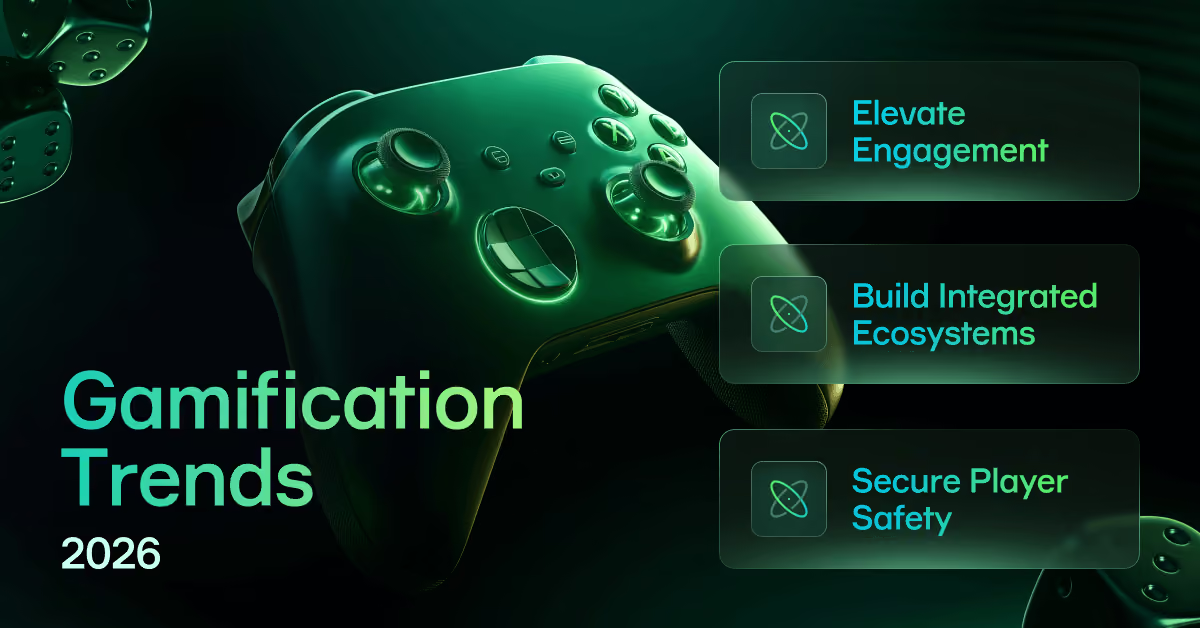
Gamification trends: Building responsible multi-service ecosystems

Gamification beyond engagement

Gamification remains one of the most powerful engagement tools in iGaming, but its role is expanding. Today, gamification supports not only entertainment, but also structured play, player education and responsible engagement.

Safer play through structured gamification

Integrated iGaming ecosystems also enable the creation of interconnected platforms where players can access casino games, sports betting, social features, and rewards within a unified ecosystem. Gamification mechanics guide player journeys while maintaining control, structure, and safety.

When combined with behavioural analytics and responsible gaming frameworks, gamification can encourage healthier play patterns. Missions, progression systems, and non-monetary rewards shift focus from wagering intensity to achievement, progression and long-term engagement.
Competing in 2026: What will define successful iGaming operators

Elevated UX and mobile-first design

User experience is a critical ranking and retention factor. Successful iGaming platforms that deliver fast loading times, intuitive navigation, mobile-first design, and frictionless onboarding will succeed as UX quality directly influences trust, engagement and player lifetime values.

Localisation, innovation and platform agility

Localisation will be essential for global expansion. This includes market-specific content, payment methods, language, UX flows, and responsible gaming configurations. Flexible, modular platforms will enable operators to adapt quickly to regulatory and market changes.

Responsible operations drive sustainable growth

Responsible gaming and player protection policies should not be seen as constraints, instead they should be viewed as growth enablers. Operators that embed responsibility into their business models will benefit from stronger brand trust, regulatory stability and long-term player loyalty. Such focus benefits them commercially and, from a reputational perspective, helps the industry demonstrate that it takes its corporate and social responsibilities seriously.

From Reaction to Prevention

While traditional responsible gambling tools like warnings and helplines have served as the foundations for player safety, they are increasingly viewed as insufficient in a modern context. These reactive measures often intervene only after a problem has escalated, failing to address the fast-paced, immersive nature of modern gaming environments. As the industry evolves, there is a growing recognition that relying on players to seek out help in a moment of crisis is no longer a comprehensive strategy for harm prevention. The future of player protection lies in proactive engagement and real-time intervention. 

Technological Innovations

Technological advances are fundamentally reshaping the landscape of responsible gambling, moving beyond static tools to more dynamic systems. By leveraging AI and machine learning, operators can now use real-time monitoring and predictive analytics to identify risky behaviour as it happens. This allows for highly personalised interventions that go beyond standard measures like self-exclusion, deposit limits and reality checks, integrating these safeguards more seamlessly across various gaming platforms.

Conclusion: The future of iGaming is responsible, regulated and player-centric

The iGaming industry faces a clear reality in 2026 as sustainable success depends on responsible innovation. High acquisition volumes alone are no longer sufficient. Operators must prioritise player protection, regulatory compliance, advanced analytics and meaningful engagement.

Platforms that combine responsible gaming frameworks with high-quality UX, localised experiences and intelligent gamification will lead the next phase of industry growth. The operators that succeed in 2026 and beyond will be those who recognise that long-term value is created through trust, transparency and player-centric design.

Share to:
iGaming predictions for 2026: Responsible gambling, player protection and operator responsibilities

Redefining the igaming industry in 2026

The iGaming industry is approaching a critical inflection point. As 2026 gets underway, operators face a rapidly evolving landscape defined by changing regulatory requirements, rising player expectations, and increasing competition across global markets. Growth is no longer driven solely by acquisition volumes or promotional spend. Instead, long-term success will depend on how effectively operators integrate responsible gaming, player protection, and compliance into their core business strategies.

Global iGaming market growth, widespread mobile adoption, and regulatory expansion have accelerated market saturation. In response, regulators, players, and partners are demanding higher standards of transparency, safety, and accountability. For iGaming operators, 2026 represents a shift from short-term growth tactics to sustainable, responsibility-driven operations.

Industry outlook: market saturation and rising expectations

Increasing competition in regulated markets

Regulated iGaming jurisdictions are highly competitive as established brands, emerging operators and global platforms compete for the same players, driving up acquisition costs and reducing the effectiveness of bonus-driven strategies. Player loyalty will increasingly depend on trust, product quality and long-term engagement rather than short-term incentives.

Standardisation and the "EU Gold Standard"

While gambling remains a matter of national subsidiarity, 2025 saw the widespread adoption of voluntary standards proposed by the European Committee for Standardisation (CEN). These standards have created a "common language" for gaming across Europe and are likely to increase further as regulators continue to exchange ideas and information on regulatory practices.

Enhanced Know-Your-Customer (KYC) and Anti-Money Laundering (AML) protocols are now aligned with the EU’s latest Anti-Money Laundering Directives, and operators are no longer just checking IDs; they are integrated into pan-European financial intelligence networks. In markets from Scandinavia to the Mediterranean, real-time verification is the norm, ensuring that players are not only who they say they are but that their funds are legitimately sourced.

The rise of the "Duty of Care" model

The most significant shift across Europe is the legal codification of a "Duty of Care." In 2026, affordability checks and responsible gaming will no longer be left to the operator’s discretion.

  • Financial vulnerability checks: Influenced by the UK’s early adoption and the Netherlands’ strict enforcement, most EU jurisdictions now require "frictionless" affordability assessments. These often utilise the EU’s Digital Identity Wallet, allowing for seamless, privacy-compliant verification of a player’s financial health.
  • Algorithmic intervention: Across Europe, regulators now mandate that operators use AI to detect "Markers of Harm." Failing to intervene when a player displays signs of problematic behaviour is now considered a breach of the operating licence.

Higher regulatory standards and compliance requirements

Regulatory frameworks across Europe and emerging markets are becoming more clearly defined. Enhanced know-your-customer (KYC), anti-money laundering (AML) compliance, affordability checks and responsible gaming requirements are now standard expectations. Operators that fail to meet these standards risk fines, licence suspensions or market exclusion.

Ethical imperatives

The iGaming landscape has undergone a radical transformation over the past two decades, moving from a niche digital pastime to a dominant global entertainment sector. However, this rapid expansion has brought the industry’s social responsibilities into sharp focus. For modern operators, implementing robust responsible gaming (RG) policies and player protection measures is no longer merely a regulatory box-ticking exercise; it is the cornerstone of long-term commercial viability and brand integrity.

Central to this shift is the recognition that sustainable growth cannot be built upon problematic play. High-intensity spending from a small group of vulnerable individuals is a volatile and ethically fraught revenue stream. Instead, the industry is pivoting towards a model where player longevity is prioritised over short-term yields. By integrating sophisticated RG tools — such as deposit limits, session timers, and self-exclusion registries — operators are fostering a safer environment that encourages recreational play and discourages financial overextension.

Beyond compliance, there is a compelling ‘human-centric’ argument for these measures. Advanced gamification and high-speed gameplay, while engaging, require a counterbalancing force to ensure players remain in control. By providing users with real-time data on their spending patterns and behavioural nudges when play becomes erratic, platforms can empower their customers. This transparency builds a deep sense of trust, which is the most valuable currency in a saturated market. When a player feels a platform genuinely cares for their well-being, their loyalty to that brand strengthens, creating a more stable and reputable ecosystem for all stakeholders.

The shift towards prevention and KYC

The industry’s focus has notably transitioned from reactive intervention to proactive prevention. Rather than waiting for a player to display signs of distress, forward-thinking companies are now allocating significant resources to predictive modelling and early-warning systems. Central to this preventative strategy is the sophisticated use of Know Your Customer (KYC) systems. In modern iGaming, KYC is far more than a simple identity check; it is a gateway to a safer player journey. By leveraging automated KYC tools and real-time data verification, operators can conduct seamless age verification and financial vulnerability assessments at the point of entry. This allows companies to tailor their protection measures to the specific risk profile of each individual, ensuring that prevention is both frictionless for the recreational user and ironclad for those at risk.

Responsible Gaming in 2026: From Compliance Requirement to Strategic Advantage

Industry prediction by David Yatom Hay, General Counsel at Soft2Bet

Responsible gaming as a competitive differentiator

Responsible gaming is no longer a box-ticking exercise. In 2026, it serves as a key differentiator between sustainable operators and short-term market entrants. For Soft2Bet, platforms that proactively integrate responsible gaming tools into their user experience will build stronger player trust and achieve higher lifetime value (LTV).

Responsible gambling and iGaming marketing are often viewed as distinct disciplines, with marketing traditionally aimed at attracting and retaining players, while responsible gambling focuses on player protection. However, these two areas are very much interconnected.

Modern iGaming marketing strategies that integrate responsible gambling principles can drive stronger brand loyalty and long-term retention. Players who trust that an operator prioritises their well-being are more likely to remain active, satisfied customers. In other words, responsibility drives retention.

Building trust through transparency

Transparency in promotional messaging and user experience design is key. Clear terms and conditions, visible wagering requirements, and accessible self-exclusion options help establish credibility. By embedding responsible gambling messaging into marketing campaigns, operators can demonstrate accountability and build long-term trust.

One way to leverage this transparency is by combining these transparent communications with strong product innovations, particularly through gamification. Open and personalised messages are highly relevant to players and strengthen their trust levels to create an environment where data and creativity meet. 

As iGaming companies search for new methods to attract, engage and retain players responsibly, they will harness industry-wide creativity and in this crowded marketplace, demonstrating ethical conduct can distinguish one operator from another. 

This is because positioning responsible gambling as a cornerstone of iGaming marketing enhances brand perception, particularly among regulated jurisdictions and socially conscious players. 

In my view, 2026 will mark the beginning of a new era where responsible gambling becomes not just a regulatory requirement but a design principle. The operators that thrive will be those that manage to turn compliance into innovation, using technology and creativity to build a balanced, sustainable form of entertainment for both players and the industry.

And as AI and behavioral analytics now allow operators to identify early signs of problem gambling, by combining these insights with personalised messages and responsible gambling tools, casinos can intervene before risky behavior escalates. The result: more sustainable engagement and reduced churn rates.

Responsible gambling is no longer a compliance checkbox; it is a core component of modern iGaming marketing strategy.

Regulatory requirements and global market expansion

As new markets regulate iGaming, many are adopting advanced responsible gaming frameworks from day one. Operators expanding internationally must demonstrate scalable, adaptable compliance systems capable of meeting diverse regulatory requirements while maintaining consistent player protection standards.

Next-generation responsible gaming tools go beyond self-exclusion and static limits. In 2026, leading iGaming operators will embed real-time monitoring, personalised limits, and proactive intervention mechanisms directly into gameplay, onboarding, and retention flows.

Product innovation: Soft2Bet MEGA redefines iGaming ROI

In an industry where the cost of player acquisition is skyrocketing, Soft2Bet’s Motivational Engineering Gaming Application (MEGA) has emerged as a transformative solution. By shifting the focus from transactional play to emotional engagement, MEGA has redefined the economic profile of modern iGaming platforms.

The science of motivational engineering

MEGA is not merely a collection of "add-on" features; it is a standalone, API-ready gamification engine that applies personalisation algorithms to the player journey. The system moves players through a structured ecosystem of "habit loops," using progress-based mechanics that are common in casual gaming and social media.

  • Progression-based mechanics: Features like MEGA Builder allow players to build virtual environments, turning individual bets into milestones within a larger narrative.
  • Social and competitive layers: Through real-time leaderboards, weekly leagues, and social challenges, MEGA fosters a sense of community, encouraging peer-driven interaction.
  • Earned vs. given rewards: By replacing traditional, random bonus drops with rewards earned through missions and challenges, players feel a sense of mastery and ownership over their bonuses.

This methodology creates a sustainable gameplay environment over longer time periods, ensuring players stay on the site to take part in gamified content that delivers customised and moderated gameplay.

Efficiency and compliance at scale

One of MEGA’s most innovative aspects is its modular, API-first architecture. This allows operators to launch or scale into new markets in under 90 days. Crucially, the engine is built with "compliance-by-design," automatically adjusting its gamification features — such as which missions or rewards are available — to meet the specific regulatory requirements of jurisdictions like Sweden, Denmark, or Ontario (Canada).

Through this combination of technical flexibility and behavioural patterns, Soft2Bet has transformed gamification from a marketing "gimmick" into a core revenue driver. It proves that in the modern iGaming landscape, sustainable growth is a direct product of superior player engagement.

The changing role of igaming operators: Player safety and behavioural monitoring

From entertainment provider to player protection partner

The role of the iGaming operator is evolving and in 2026, they are expected to actively protect players by monitoring behavior, identifying risk signals, and intervening early. This shift aligns with broader digital responsibility trends across online platforms.

Predictive analytics and AI-driven player monitoring

Advanced data analytics and artificial intelligence will power predictive responsible gaming systems. These technologies allow operators to detect behavioral risk patterns in real time and respond with contextual messaging, cooling-off periods, or limit adjustments that promote safer play.

Trust, transparency and data privacy

As player monitoring becomes more sophisticated, data protection and transparency will be critical. Operators must clearly communicate how data is used, ensure GDPR and data privacy compliance, and maintain player trust. In 2026, transparency will directly impact brand credibility and retention.

Gamification trends: Building responsible multi-service ecosystems

Gamification beyond engagement

Gamification remains one of the most powerful engagement tools in iGaming, but its role is expanding. Today, gamification supports not only entertainment, but also structured play, player education and responsible engagement.

Safer play through structured gamification

Integrated iGaming ecosystems also enable the creation of interconnected platforms where players can access casino games, sports betting, social features, and rewards within a unified ecosystem. Gamification mechanics guide player journeys while maintaining control, structure, and safety.

When combined with behavioural analytics and responsible gaming frameworks, gamification can encourage healthier play patterns. Missions, progression systems, and non-monetary rewards shift focus from wagering intensity to achievement, progression and long-term engagement.

Competing in 2026: What will define successful iGaming operators

Elevated UX and mobile-first design

User experience is a critical ranking and retention factor. Successful iGaming platforms that deliver fast loading times, intuitive navigation, mobile-first design, and frictionless onboarding will succeed as UX quality directly influences trust, engagement and player lifetime values.

Localisation, innovation and platform agility

Localisation will be essential for global expansion. This includes market-specific content, payment methods, language, UX flows, and responsible gaming configurations. Flexible, modular platforms will enable operators to adapt quickly to regulatory and market changes.

Responsible operations drive sustainable growth

Responsible gaming and player protection policies should not be seen as constraints, instead they should be viewed as growth enablers. Operators that embed responsibility into their business models will benefit from stronger brand trust, regulatory stability and long-term player loyalty. Such focus benefits them commercially and, from a reputational perspective, helps the industry demonstrate that it takes its corporate and social responsibilities seriously.

From Reaction to Prevention

While traditional responsible gambling tools like warnings and helplines have served as the foundations for player safety, they are increasingly viewed as insufficient in a modern context. These reactive measures often intervene only after a problem has escalated, failing to address the fast-paced, immersive nature of modern gaming environments. As the industry evolves, there is a growing recognition that relying on players to seek out help in a moment of crisis is no longer a comprehensive strategy for harm prevention. The future of player protection lies in proactive engagement and real-time intervention. 

Technological Innovations

Technological advances are fundamentally reshaping the landscape of responsible gambling, moving beyond static tools to more dynamic systems. By leveraging AI and machine learning, operators can now use real-time monitoring and predictive analytics to identify risky behaviour as it happens. This allows for highly personalised interventions that go beyond standard measures like self-exclusion, deposit limits and reality checks, integrating these safeguards more seamlessly across various gaming platforms.

Conclusion: The future of iGaming is responsible, regulated and player-centric

The iGaming industry faces a clear reality in 2026 as sustainable success depends on responsible innovation. High acquisition volumes alone are no longer sufficient. Operators must prioritise player protection, regulatory compliance, advanced analytics and meaningful engagement.

Platforms that combine responsible gaming frameworks with high-quality UX, localised experiences and intelligent gamification will lead the next phase of industry growth. The operators that succeed in 2026 and beyond will be those who recognise that long-term value is created through trust, transparency and player-centric design.

Share to: