
Discover the thrill of MEGA Clawee and experience the fun first-handed at our stand
.webp)

.png)
Bonus abuse, “easy money” schemes, and identity theft have become persistent operational risks for iGaming operators, and they’re increasingly difficult to spot with traditional controls alone. While standard cybersecurity protocols and transactional checks still play a significant role, they don’t always give operators the best chance to spot the warning signs before an incident escalates.
Rapid shifts in how a player signs up, deposits, plays, and cashes out are just some indicators that something might be amiss. That’s why the focus has increasingly shifted to real-time behavioural analytics. By monitoring patterns as they form and, crucially, spotting deviations from a player’s usual baseline, operators can use this approach to flag suspicious activity sooner and respond more quickly, catching minor anomalies before they become reportable incidents.
Responsible gambling and security are tightly linked. Many of the same behavioural signals that suggest bonus exploitation, multi-accounting, or account takeover can also indicate harm, financial vulnerability, or coercion.
This analysis explores how iGaming operators use behavioural analytics to detect problem gambling patterns and suspicious activity in tandem, aligning real-time monitoring with KYC, transaction monitoring, anti-fraud controls, and AML measures at the individual player level, so risk is addressed early, proportionately, and with audit-ready clarity.
Player monitoring has moved a long way from manual review and isolated checks. Not long ago, much of the work happened after the fact through spreadsheets, sampling, periodic reporting, and reactive action once external issues surfaced.
That approach is misaligned with modern iGaming, as risk can escalate in minutes. Payments now move instantly, while faster game cycles and always-on access compress decision windows and increase exposure. At the same time, regulators increasingly expect evidence that operators can identify and address risk early, instead of relying on documentation of what happened later.
Automated behavioural analytics has become a baseline requirement for modern player monitoring. The aim is to provide proportionate player safety for the individual, while reinforcing online gambling compliance and reputational security for the operator. This is an act of great balance as protecting vulnerable players is essential, but this should never infringe on the gaming experience of the everyday player.
iGaming analytics brings together signals that previously sat across separate teams:
When this data is processed in real time, suspicious activity can be identified earlier, and responsible gaming measures can be taken while behavioural patterns are still emerging. Operationally, this reduces the gap between early risk signals and reportable incidents.
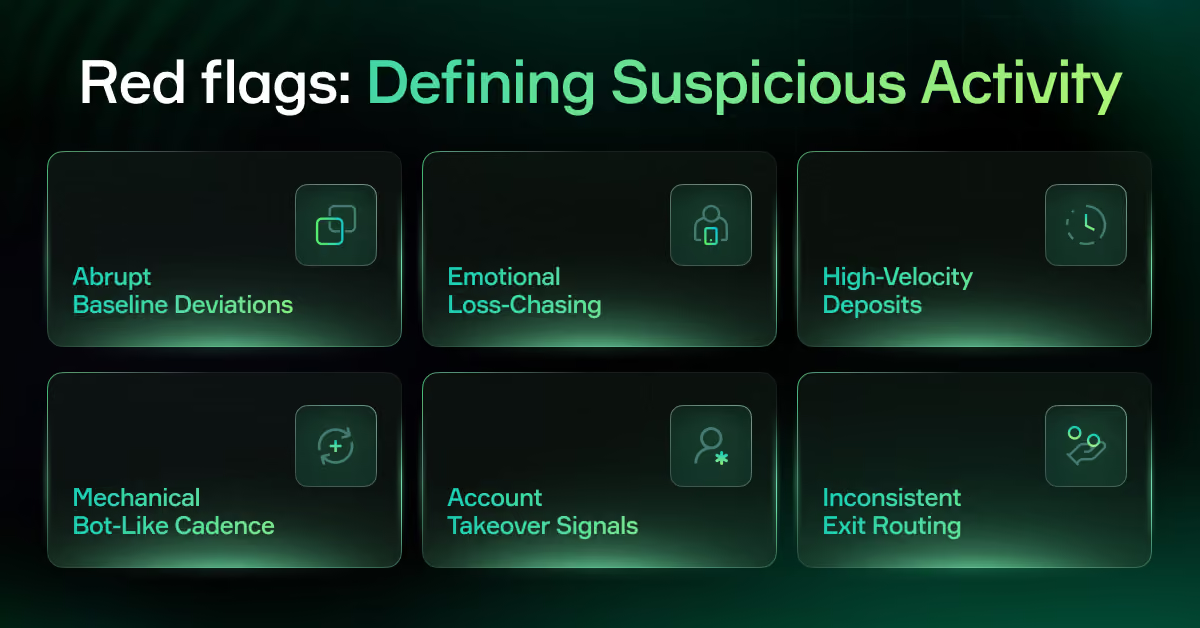
Players placing large bets at high frequency are not, in themselves, a red flag. In fact, consistent high-stakes players are typically treated as VIPs by online casinos. Risk becomes clearer when behaviour shows volatility and abrupt shifts in pattern. For this reason, behavioural analytics prioritises deviation from an established baseline rather than relying solely on absolute spend.
A stable VIP pattern can include high stakes and long sessions, but it often remains consistent, with similar play times, a steady betting rhythm, predictable deposit behaviour, and clean payment routes.
Behaviour deemed higher risk follows a different pattern and is more often linked to chasing losses through rapid stake increases, uneven betting marked by bursts or pauses, late-night play paired with rising spend, and repeated deposits over short periods. Additional indicators often include sudden changes in game choice or market selection, alongside emotional betting patterns that intensify after losses.
The earlier a pattern shift is identified, the wider the range of proportionate responses available. Real-time behavioural analytics makes it possible to intervene at a lower intensity, using prompts and stabilisation tools before the player reaches a point of crisis.
If a player starts depositing significantly more than before, begins betting in a radically different manner, or makes repeat deposits within minutes of losing, those shifts warrant attention. The same applies when withdrawals are requested shortly after deposits, particularly after a bonus has been used, or when payment behaviour changes abruptly in ways that do not match prior play.
This framing brings risk control and responsible gaming into a single operational flow. Acting early limits harm and creates clear, auditable records for online gambling compliance.
Money fraud is often driven by behavioural patterns long before it becomes visible in financial reporting. Managed services for anti-fraud focus on early signals that indicate intent and coordination.
Money laundering behaviours in iGaming typically involve placing funds and disguising their origin, before extracting value in a way that appears legitimate. To address these risks, operators apply sector guidance through player-level AML controls, supported by transaction monitoring and real-time behavioural scoring.
Responsible gaming cannot operate in isolation in the modern iGaming platform ecosystem. When fraud is given room to grow, the wider environment becomes harder to manage, making monitoring less clear and creating unnecessary friction for legitimate players. This is why managed anti-fraud services are a core part of effective player protection.
Fraud creates operational drag by forcing teams to spend time addressing coordinated bonus abuse rather than focusing on genuine harm. Similar signals can also blur the line between fraud and gambling harm, increasing the risk of misclassification.
Linking behavioural analytics with managed anti-fraud services reduces this risk by cross-checking suspicious activity against identity and payment information before decisions are made.
Often viewed as promotional issues, multi-accounting and bonus abuse frequently surface much earlier than other compliance problems. They often point to deeper risks, including:
Managed services for anti-fraud disrupt these behaviours in a timely manner, keeping risk signals clear for responsible gaming and problem gambling detection while preventing coordinated abuse from distorting risk assessment.
In general, coordinated usually follows repeatable patterns aimed at extracting value consistently and at scale. A vulnerable player is more likely to show unstable behaviour, including chasing losses, longer sessions, fewer breaks, and emotional wagering that intensifies over time.
Behavioural analytics distinguishes between these paths by analysing:
When suspicious activity overlaps with player protection triggers, proportionate action is prioritised. This may result in a safer gambling intervention for one player and an anti-fraud restriction for another, even when the same initial alert is triggered.
Regulators expect operators to explain the actions taken and the reasons behind them. To meet this expectation, AML measures for each player need to run as an ongoing process across the player journey, with transaction monitoring and audit-ready records built into each decision.
Operators apply AML measures for each player at key points in the player lifecycle, including:
Funding checks are often framed as a crime-prevention measure, yet unexplained or inconsistent payment behaviour can also signal vulnerability or a loss of control. For this reason, funding analysis increasingly plays a dual role, supporting both player protection and AML safeguards.
When funding concerns appear alongside behavioural risk signals, escalation can follow via KYC and player verification. Deposit controls or account restrictions may also be applied, alongside manual review supported by a clear, documented rationale.
Although patterns linked to money laundering and gambling harm behaviours are not the same, they can overlap.
In line with the behavioural signals discussed earlier, some laundering patterns involve low-engagement activity, where funds move through an account with limited interaction and are withdrawn soon after being deposited.
Harm patterns tend to show high engagement through longer sessions. As play continues, loss-chasing often occurs, followed by repeated deposits over short periods.
iGaming analytics helps separate intent signals, allowing suspicious activity to be assessed through anti-fraud services before triggering AML or responsible gambling controls.
Responsible gambling takes shape when timely action follows detection, rather than stopping at identification alone. Targeted responses focus on stabilisation tools and clear documentation, while still meeting online gambling compliance requirements.
Operational controls apply intervention thresholds based on both severity and confidence in the underlying risk signals:
Stabilisation tools, including cooling-off periods and deposit limits, are most effective when applied at the right time and with their functionality clearly explained to the player. By slowing play or limiting spend for a defined period, these tools help interrupt escalation cycles, particularly when indicators for chasing losses are present.
Clear, well-documented use of these measures also protects the operator by creating a clear record of how risk was identified and addressed.
Documentation forms part of the operating model and is handled as a core control. Every significant decision is recorded with:
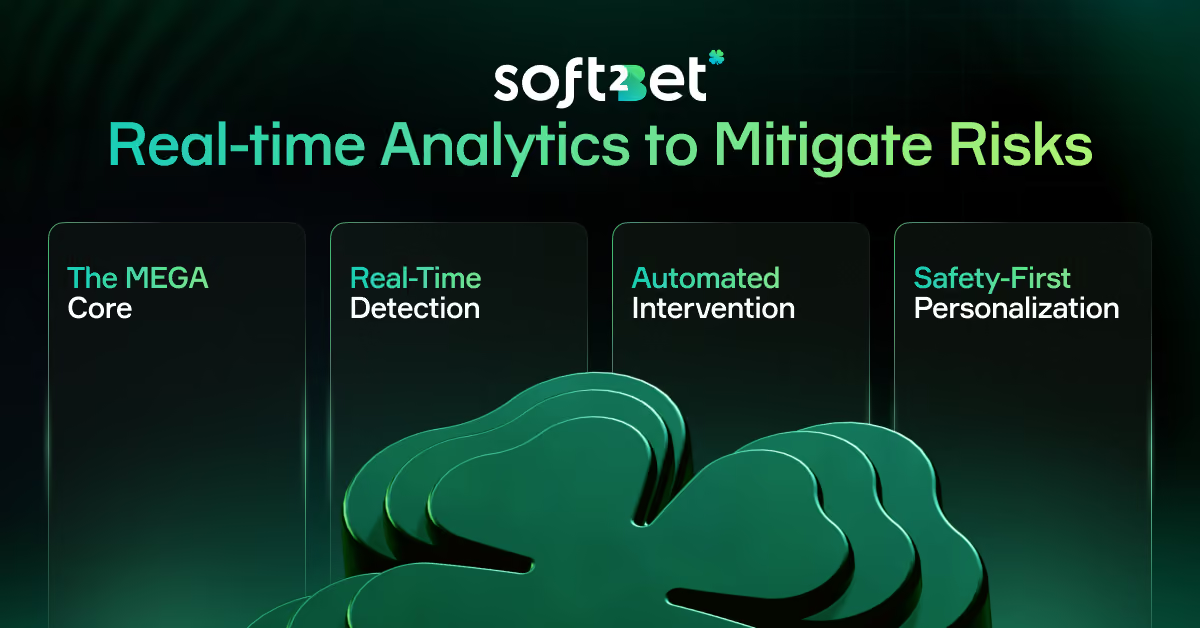
Soft2Bet designs engagement-driven platforms with risk control embedded into daily operations. The platform’s real-time iGaming analytics supports rapid, consistent responses to behavioural signals, translating detection into action that supports player protection and online gambling compliance.
Soft2Bet’s MEGA (Motivational Engineering Gaming Application) supports gamification and personalisation through reward settings, considered bonus triggers, user segmentation, and difficulty levels. The platform presents MEGA as integration-ready and API-based, designed to increase engagement and support sustainable player activity through data-led decision-making.
The system balances this engagement capability with responsible gambling by applying clear rules:
In practical terms, risk scoring within the system adjusts or limits marketing exposure for players who show signs of harm, ensuring that engagement mechanics do not reinforce risky behaviour.
Soft2Bet uses high-velocity data streams to detect:
These shifts inform whether action should follow a fraud or responsible gambling pathway.
Soft2Bet applies automated intervention loops to minimise delays, because delayed action often means missed opportunities. The process moves from detection to response in minutes:
Soft2Bet uses personalisation to reduce harm as well as to improve experience:
This approach is closely tied to data protection, as operating across multiple jurisdictions creates distinct requirements for storage, access controls, data retention, and player rights. Soft2Bet treats data protection as a core operational requirement when implementing behavioural analytics and player protection measures.
Early problem gambling detection focuses on behavioural change over time and goes beyond isolated spending levels. Deposit acceleration, longer sessions, reduced breaks, and stake escalation after losses often appear together as patterns begin to form, allowing earlier and more measured intervention.
Common behavioural markers linked to gambling addiction prevention include chasing losses, frequent deposits within short windows, increasingly long sessions, and escalating stake volatility. These signals are treated as player protection triggers, with intervention thresholds applied based on severity and repetition.
Data helps prevent gambling harm when insights lead directly to timely and measured action. iGaming analytics and real-time triggers prompt responsible gambling nudges, reality checks, and stabilisation tools such as cooling-off periods and deposit limits. If the risk persists, the response escalates to manual interventions backed by clear documentation.
Effective software combines behavioural analytics with operational workflows. These workflows cover case routing, documented actions, KYC (Know Your Customer), player verification, transaction monitoring, and AML measures for each player.
Behavioural tracking uses gameplay and account signals to identify patterns that may indicate harm or suspicious activity. These signals can include session length, bet timing, deposit behaviour, limit changes, and withdrawal urgency.
Chasing losses occurs when play continues or intensifies after a loss. Common signs include higher bets, quick re-deposits, longer sessions, and reduced breaks.
Safer gambling algorithms look for patterns in play, including how often someone bets, how long sessions last, changes in stake size, and deposit behaviour. These systems link those signals to compliance checks such as KYC, player verification, transaction monitoring, and AML measures, providing real-time guidance on player protection actions.
.png)
Bonus abuse, “easy money” schemes, and identity theft have become persistent operational risks for iGaming operators, and they’re increasingly difficult to spot with traditional controls alone. While standard cybersecurity protocols and transactional checks still play a significant role, they don’t always give operators the best chance to spot the warning signs before an incident escalates.
Rapid shifts in how a player signs up, deposits, plays, and cashes out are just some indicators that something might be amiss. That’s why the focus has increasingly shifted to real-time behavioural analytics. By monitoring patterns as they form and, crucially, spotting deviations from a player’s usual baseline, operators can use this approach to flag suspicious activity sooner and respond more quickly, catching minor anomalies before they become reportable incidents.
Responsible gambling and security are tightly linked. Many of the same behavioural signals that suggest bonus exploitation, multi-accounting, or account takeover can also indicate harm, financial vulnerability, or coercion.
This analysis explores how iGaming operators use behavioural analytics to detect problem gambling patterns and suspicious activity in tandem, aligning real-time monitoring with KYC, transaction monitoring, anti-fraud controls, and AML measures at the individual player level, so risk is addressed early, proportionately, and with audit-ready clarity.
Player monitoring has moved a long way from manual review and isolated checks. Not long ago, much of the work happened after the fact through spreadsheets, sampling, periodic reporting, and reactive action once external issues surfaced.
That approach is misaligned with modern iGaming, as risk can escalate in minutes. Payments now move instantly, while faster game cycles and always-on access compress decision windows and increase exposure. At the same time, regulators increasingly expect evidence that operators can identify and address risk early, instead of relying on documentation of what happened later.
Automated behavioural analytics has become a baseline requirement for modern player monitoring. The aim is to provide proportionate player safety for the individual, while reinforcing online gambling compliance and reputational security for the operator. This is an act of great balance as protecting vulnerable players is essential, but this should never infringe on the gaming experience of the everyday player.
iGaming analytics brings together signals that previously sat across separate teams:
When this data is processed in real time, suspicious activity can be identified earlier, and responsible gaming measures can be taken while behavioural patterns are still emerging. Operationally, this reduces the gap between early risk signals and reportable incidents.

Players placing large bets at high frequency are not, in themselves, a red flag. In fact, consistent high-stakes players are typically treated as VIPs by online casinos. Risk becomes clearer when behaviour shows volatility and abrupt shifts in pattern. For this reason, behavioural analytics prioritises deviation from an established baseline rather than relying solely on absolute spend.
A stable VIP pattern can include high stakes and long sessions, but it often remains consistent, with similar play times, a steady betting rhythm, predictable deposit behaviour, and clean payment routes.
Behaviour deemed higher risk follows a different pattern and is more often linked to chasing losses through rapid stake increases, uneven betting marked by bursts or pauses, late-night play paired with rising spend, and repeated deposits over short periods. Additional indicators often include sudden changes in game choice or market selection, alongside emotional betting patterns that intensify after losses.
The earlier a pattern shift is identified, the wider the range of proportionate responses available. Real-time behavioural analytics makes it possible to intervene at a lower intensity, using prompts and stabilisation tools before the player reaches a point of crisis.
If a player starts depositing significantly more than before, begins betting in a radically different manner, or makes repeat deposits within minutes of losing, those shifts warrant attention. The same applies when withdrawals are requested shortly after deposits, particularly after a bonus has been used, or when payment behaviour changes abruptly in ways that do not match prior play.
This framing brings risk control and responsible gaming into a single operational flow. Acting early limits harm and creates clear, auditable records for online gambling compliance.
Money fraud is often driven by behavioural patterns long before it becomes visible in financial reporting. Managed services for anti-fraud focus on early signals that indicate intent and coordination.
Money laundering behaviours in iGaming typically involve placing funds and disguising their origin, before extracting value in a way that appears legitimate. To address these risks, operators apply sector guidance through player-level AML controls, supported by transaction monitoring and real-time behavioural scoring.
Responsible gaming cannot operate in isolation in the modern iGaming platform ecosystem. When fraud is given room to grow, the wider environment becomes harder to manage, making monitoring less clear and creating unnecessary friction for legitimate players. This is why managed anti-fraud services are a core part of effective player protection.
Fraud creates operational drag by forcing teams to spend time addressing coordinated bonus abuse rather than focusing on genuine harm. Similar signals can also blur the line between fraud and gambling harm, increasing the risk of misclassification.
Linking behavioural analytics with managed anti-fraud services reduces this risk by cross-checking suspicious activity against identity and payment information before decisions are made.
Often viewed as promotional issues, multi-accounting and bonus abuse frequently surface much earlier than other compliance problems. They often point to deeper risks, including:
Managed services for anti-fraud disrupt these behaviours in a timely manner, keeping risk signals clear for responsible gaming and problem gambling detection while preventing coordinated abuse from distorting risk assessment.
In general, coordinated usually follows repeatable patterns aimed at extracting value consistently and at scale. A vulnerable player is more likely to show unstable behaviour, including chasing losses, longer sessions, fewer breaks, and emotional wagering that intensifies over time.
Behavioural analytics distinguishes between these paths by analysing:
When suspicious activity overlaps with player protection triggers, proportionate action is prioritised. This may result in a safer gambling intervention for one player and an anti-fraud restriction for another, even when the same initial alert is triggered.
Regulators expect operators to explain the actions taken and the reasons behind them. To meet this expectation, AML measures for each player need to run as an ongoing process across the player journey, with transaction monitoring and audit-ready records built into each decision.
Operators apply AML measures for each player at key points in the player lifecycle, including:
Funding checks are often framed as a crime-prevention measure, yet unexplained or inconsistent payment behaviour can also signal vulnerability or a loss of control. For this reason, funding analysis increasingly plays a dual role, supporting both player protection and AML safeguards.
When funding concerns appear alongside behavioural risk signals, escalation can follow via KYC and player verification. Deposit controls or account restrictions may also be applied, alongside manual review supported by a clear, documented rationale.
Although patterns linked to money laundering and gambling harm behaviours are not the same, they can overlap.
In line with the behavioural signals discussed earlier, some laundering patterns involve low-engagement activity, where funds move through an account with limited interaction and are withdrawn soon after being deposited.
Harm patterns tend to show high engagement through longer sessions. As play continues, loss-chasing often occurs, followed by repeated deposits over short periods.
iGaming analytics helps separate intent signals, allowing suspicious activity to be assessed through anti-fraud services before triggering AML or responsible gambling controls.
Responsible gambling takes shape when timely action follows detection, rather than stopping at identification alone. Targeted responses focus on stabilisation tools and clear documentation, while still meeting online gambling compliance requirements.
Operational controls apply intervention thresholds based on both severity and confidence in the underlying risk signals:
Stabilisation tools, including cooling-off periods and deposit limits, are most effective when applied at the right time and with their functionality clearly explained to the player. By slowing play or limiting spend for a defined period, these tools help interrupt escalation cycles, particularly when indicators for chasing losses are present.
Clear, well-documented use of these measures also protects the operator by creating a clear record of how risk was identified and addressed.
Documentation forms part of the operating model and is handled as a core control. Every significant decision is recorded with:

Soft2Bet designs engagement-driven platforms with risk control embedded into daily operations. The platform’s real-time iGaming analytics supports rapid, consistent responses to behavioural signals, translating detection into action that supports player protection and online gambling compliance.
Soft2Bet’s MEGA (Motivational Engineering Gaming Application) supports gamification and personalisation through reward settings, considered bonus triggers, user segmentation, and difficulty levels. The platform presents MEGA as integration-ready and API-based, designed to increase engagement and support sustainable player activity through data-led decision-making.
The system balances this engagement capability with responsible gambling by applying clear rules:
In practical terms, risk scoring within the system adjusts or limits marketing exposure for players who show signs of harm, ensuring that engagement mechanics do not reinforce risky behaviour.
Soft2Bet uses high-velocity data streams to detect:
These shifts inform whether action should follow a fraud or responsible gambling pathway.
Soft2Bet applies automated intervention loops to minimise delays, because delayed action often means missed opportunities. The process moves from detection to response in minutes:
Soft2Bet uses personalisation to reduce harm as well as to improve experience:
This approach is closely tied to data protection, as operating across multiple jurisdictions creates distinct requirements for storage, access controls, data retention, and player rights. Soft2Bet treats data protection as a core operational requirement when implementing behavioural analytics and player protection measures.
Early problem gambling detection focuses on behavioural change over time and goes beyond isolated spending levels. Deposit acceleration, longer sessions, reduced breaks, and stake escalation after losses often appear together as patterns begin to form, allowing earlier and more measured intervention.
Common behavioural markers linked to gambling addiction prevention include chasing losses, frequent deposits within short windows, increasingly long sessions, and escalating stake volatility. These signals are treated as player protection triggers, with intervention thresholds applied based on severity and repetition.
Data helps prevent gambling harm when insights lead directly to timely and measured action. iGaming analytics and real-time triggers prompt responsible gambling nudges, reality checks, and stabilisation tools such as cooling-off periods and deposit limits. If the risk persists, the response escalates to manual interventions backed by clear documentation.
Effective software combines behavioural analytics with operational workflows. These workflows cover case routing, documented actions, KYC (Know Your Customer), player verification, transaction monitoring, and AML measures for each player.
Behavioural tracking uses gameplay and account signals to identify patterns that may indicate harm or suspicious activity. These signals can include session length, bet timing, deposit behaviour, limit changes, and withdrawal urgency.
Chasing losses occurs when play continues or intensifies after a loss. Common signs include higher bets, quick re-deposits, longer sessions, and reduced breaks.
Safer gambling algorithms look for patterns in play, including how often someone bets, how long sessions last, changes in stake size, and deposit behaviour. These systems link those signals to compliance checks such as KYC, player verification, transaction monitoring, and AML measures, providing real-time guidance on player protection actions.