


A solid iGaming market strategy in 2026 requires a clear operational foundation to support long-term performance and ensure alignment across every part of the launch from the outset. The elements involved include company structure, payment routing, automated KYC protocols, responsible gambling controls, reporting, customer support and retention.
That is where a new jurisdictional gambling licence toolkit becomes useful, as it provides operators with a clearer way to assess where to launch, what needs to be prepared, and which risks must be resolved before a brand goes live. Legal preparation is only one part of the process, with the wider operational setup supporting compliance, player management, promotional controls, and the day-to-day requirements that keep an operation aligned with local rules.
In 2026, the industry is focused on compliance, enforcement and market access, while Alberta, Ontario and Spain are each moving through different licensing and market-opening processes.
Location is just as central as regulation, since player habits, payment preferences, advertising rules, tax treatment and licensing requirements can change sharply from one jurisdiction to another. A market that looked straightforward five years ago may now be saturated or subject to tighter controls. At the same time, new opportunities are emerging in regions shaped by mobile-first demographics, stronger player-protection rules, and debate over crypto and digital-asset payments in gambling.
An effective market-entry model brings these areas together by focusing on operational readiness. The intention is to align licence approval with commercial performance before a brand enters the market.
- Operators need one clear operating model before launch. That means knowing how players will register, verify identity, deposit, withdraw, receive offers, raise complaints and stay active from day one.
- Payments need local fit. Players expect familiar methods, smooth deposits and clear withdrawals. Regulators expect controls around AML, fraud, chargebacks, affordability and restricted funding sources.
- Localisation goes beyond translation. Onboarding, UX, casino content and sportsbook presentation, support flows, CRM journeys, and promotions need to align with local player habits. AI can support service, but human escalation still matters for complaints and vulnerable-player cases.
- Retention needs the same planning as acquisition. Personalised rewards, missions and messages can improve relevance, while responsible gambling models can help spot risk earlier. The goal is safer, long-term value.
- Compliance should be built into the product before launch. KYC, sanctions checks, affordability triggers, self-exclusion links and audit trails should be tested early, not added later.
- Strong launches connect product, compliance, conversion and retention in one setup, so the brand is ready to perform from the moment it goes live.

The expansion of the gambling market is being shaped by governments seeking to move players away from unlicensed offshore sites and into licensed channels. Each market still comes with its own entry model.
Ontario is Canada’s established private market for online casino and sports betting. Private operators have been live in the province since April 2022. Operators preparing to launch need registration from the Alcohol and Gaming Commission of Ontario (AGCO), plus an operating agreement with iGaming Ontario.
Approved suppliers, certified games, KYC, AML, data reporting, payment routing, secure account controls, self-exclusion, complaint handling and responsible gambling processes all need to be ready before launch. Ontario also restricts public advertising of bonuses and inducements. That puts more pressure on registration, payments, product clarity and the first few screens.
Verification should be quick and clear. Payments should feel familiar, and support teams need answers for document checks, account questions and payment issues. Sportsbook coverage should reflect local and North American demand, with casino lobbies that are easy to browse on mobile.
ToonieBet is Soft2Bet’s casino and sportsbook brand in Ontario, giving the company direct operating experience in the province. The brand provides Soft2Bet with live reference points across onboarding, payments, sports content, CRM, responsible gambling tools, and retention.
Operators assessing Canada need early decisions on licences, product flows, payments, account controls and responsible gambling before traffic starts.
The Alberta iGaming regulatory framework is one of the most important developments in North America for 2026. The province has confirmed that the Alberta iGaming Corporation will oversee the market, with Alberta Gaming, Liquor and Cannabis (AGLC) acting as the regulator. Operator and supplier registration has already started ahead of the launch later in the year.
Registration with AGLC is only one part of market readiness, as operators must also complete commercial arrangements with the Alberta iGaming Corporation before they can open an iGaming site.
Operators with experience in the Canadian market will already be familiar with several pressure points, including responsible gambling controls, advertising discipline, payment behaviour, provincial expectations, and local product fit.
Soft2Bet is evaluating entry into the Alberta market, pending regulatory approval. The move builds on the company’s presence in Canada, including its Ontario-facing brand, ToonieBet.
The ToonieBet brand already gives Soft2Bet operating experience in Canada, specifically in Ontario. To compete effectively in the market, the product will aim to offer features such as relevant sports content, trusted payment methods, clear account controls, responsive support, and a brand experience shaped around player habits.
Romania has an active online casino and sports betting market, with local licensing handled by the National Gambling Office (ONJN).
Operators offering online casino or sports betting in Romania must hold a Class 1 licence and the relevant authorisation. Some B2B suppliers also need Class 2 licences, including software providers, hosting services, live casino studios, certification labs, payment processors and marketing affiliates.
In Romania, product, payments, support and marketing all need to be planned around the licence route. Local presence, technical audits, game approvals, reporting, KYC, AML, self-exclusion checks, complaint handling and advertising controls must be in place before launch. Player withdrawals must go through a Class 2 payment processor, making the provider, withdrawal flow and reporting process early decisions rather than late operational details.
Affiliate pages, bonus messages and paid media must be reviewed before any campaign goes live. Romania uses website blacklists and payment blocking against unlicensed activity, so each acquisition route needs to be checked through to withdrawal.
Soft2Bet’s Romanian brands include Zinx, Don.ro and Topbet. Zinx combines casino and sports betting with local design, local marketing, sports content shaped around Romanian demand and MEGA Round to support retention. Don.ro uses a different creative route, with a 1930s noir city-builder experience powered by MEGA.
Spain is an established online casino and sports betting market, overseen nationally by the Dirección General de Ordenación del Juego (DGOJ).
Operators need a general licence for the activity they plan to offer, together with a separate licence for each product, such as sports betting, slots, roulette, or blackjack. General licences are awarded through public calls by the DGOJ, so timing must be checked before product, compliance, and media plans are set.
A site cannot go live without certified technical systems, KYC, AML, payment routing, reporting, complaint handling, self-exclusion access and safer gambling controls. Operators also need a .es domain and systems that support player identification, game integrity and transaction records.
Spain’s advertising rules need close review. The 2026 public consultation covers celebrity and influencer campaigns, customer-acquisition bonuses and gambling visibility in organic search. Paid media, CRM and bonus journeys should be checked against those rules before campaign spend begins.
Players should find clear Spanish-language journeys, quick mobile registration, familiar payment options, strong football coverage, simple casino browsing and local support. In other words, localisation should show in the product, not just the copy.
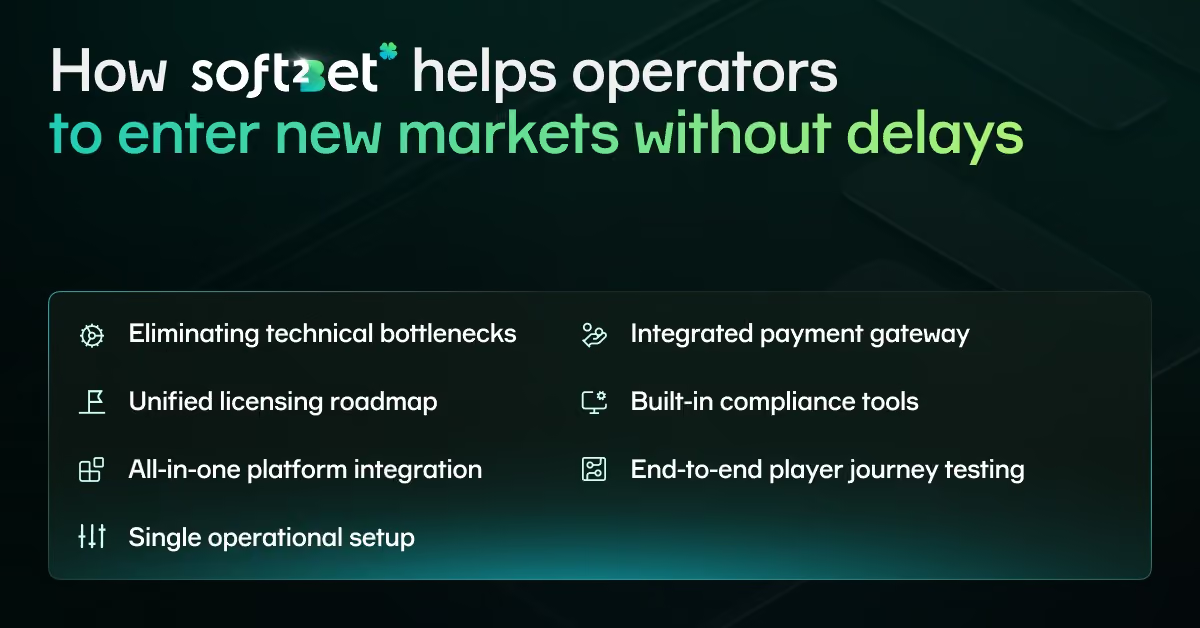
- Soft2Bet cannot control regulatory timelines, local approvals or third-party checks. Its role is to reduce delays caused by disconnected suppliers, late compliance changes, weak local payments, unclear support flows, and retention tools that do not comply with local rules.
- A new jurisdiction gambling licence toolkit should bring the launch plan into one place, covering the licence route, local entity setup, supplier approvals, technical standards, reporting, payment restrictions, marketing rules, KYC, responsible gambling duties and key launch dependencies.
- Soft2Bet turnkey solutions in 2026 support this process by bringing casino, sportsbook, Player Account Management (PAM), payments, CRM, CMS, KYC and risk tools into one operating base.
- The casino and sportsbook products follow the same model, connecting content, wallet, payments, compliance, CRM, reward tools and back-office operations through a single setup.
- Payments remain central, with real-time deposits, instant withdrawals, multilingual support, document verification, PEP screening, sanctions checks, fraud prevention and responsible gaming tools included in the same structure.
- Compliance is built into the product setup, with support for AML, KYC, data security and responsible gaming across the same operating model.
- This gives operators more control before launch. Registration, verification, deposit, gameplay, bonus eligibility, withdrawal, self-exclusion, complaints and support can be checked as one connected journey, reducing late fixes and helping brands enter key markets with a stronger base for growth.
Soft2Bet’s market-entry model covers the operational side of launch, but a strategic market-entry toolkit also needs a strong engagement layer once the brand goes live. This is where MEGA fits in. MEGA helps operators build missions, quests, tournaments and reward shops into the casino and sportsbook journey, giving new brands a more engaging product while keeping player progression aligned with the market, the brand and local rules.
Early differentiation is difficult in new jurisdictions, as competitors often launch with similar games, sportsbook coverage and payment options. MEGA helps shape a more distinct product and gives players a clearer reason to return.
Operators can configure rewards, triggers, user segmentation, difficulty levels, and other mechanics. This supports User Lifetime Value (LTV) optimisation while giving compliance teams more control over how engagement tools are applied. This approach also allows the product to respond to mobile-first demographics, casino-first audiences, casual players, and frequent sportsbook users.
MEGA is an API-ready solution powered by data-driven segmentation, flexible UX/UI and market-specific configuration. MEGA is also linked to stronger engagement, higher ROI, as well as measurable retention across brands, including Betinia, CampoBet and ToonieBet.
Soft2Bet and its brands were shortlisted for 12 categories at the EGR Operator Awards 2025, including MEGA by Soft2Bet for In-house Product of the Year, ToonieBet for North American Operator of the Year and Yoel Zuckerberg, CPO at Soft2Bet, for Individual Achievement.
In new jurisdictions, MEGA gives brands a way to build local relevance without leaning too heavily on high-cost acquisition or aggressive promotions, while also supporting stronger engagement and better long-term value.
Choosing the right country can decide whether an iGaming brand scales or stalls. A strong iGaming market strategy takes shape well before the licence is granted. That strategy connects several core components, including corporate structure, local partnerships, product localisation, automated KYC protocols, hybrid payment ecosystems, responsible gambling AI modelling, customer support, reporting, and retention.
The expansion of the gambling market now places greater pressure on operators to move quickly without losing control. The strongest new jurisdictional gambling licence toolkit needs to cover operational, technical, and commercial demands alongside legal ones.
With turnkey solutions, MEGA-powered engagement, clear compliance planning, and a product model built for licensed markets, Soft2Bet gives operators a more controlled route into new jurisdictions with a clearer path to long-term value.
What should an iGaming market strategy in 2026 include?
A modern iGaming market strategy should include licence planning, local corporate requirements, product localisation, payments, automated KYC protocols, responsible gambling controls, data reporting, customer support and retention. The strategy should also define how compliance, product, risk, and commercial teams work together before launch.
What does a gambling licence toolkit for a target market include?
A gambling licence toolkit for a target market is a practical launch document that maps licensing rules, ownership requirements, supplier approvals, technical standards, payment restrictions, responsible gambling obligations, self-exclusion requirements, reporting duties and regulatory audit trails.
What are the main iGaming compliance analyst duties in 2026?
The main responsibilities of a compliance analyst include mapping regulatory obligations, translating local rules into product requirements and testing KYC alongside AML controls. The role also involves reviewing promotional logic, monitoring payment risk, managing regulatory audit trails, checking self-exclusion processes and escalating responsible gambling cases.
Why is the Alberta iGaming regulatory framework important?
The Alberta iGaming regulatory framework is important as it opens a major opportunity in Canada outside Ontario. Operators must work with AGLC alongside the Alberta iGaming Corporation while meeting local requirements around technology, suppliers, player protection, responsible gambling, and compliance.
How do Soft2Bet turnkey solutions in 2026 support market entry?
Soft2Bet’s turnkey solutions include a casino, sportsbook, PAM, payments, CRM, CMS, KYC, risk tools, customer support and MEGA engagement mechanics. This gives operators more control over launch friction, localisation, compliance, conversion, retention and long-term performance as they enter new jurisdictions.
.svg)
.svg)



.png)


.png)

.jpg)