
In today’s iGaming world, responsible gambling includes disciplines as varied as marketing, customer service and compliance. But what binds them together is smart design. It’s key to boosting player trust, retention and social responsibility.
As the industry continues to grow and evolve, responsible gambling has also become a central component for operators, enabling them to develop sustainable business practices, stay on the right side of regulators and enable the industry to promote a positive image of itself to lawmakers, the general public and regulatory bodies.
How to define responsible gambling
But within that outline there is the obvious question… What is responsible gambling (RG)? Indeed, the topic can cover all sorts of activities: whether it’s running safe, but effective, advertising and marketing campaigns, to reducing the industry’s dependency on a small number of high spending players or ensuring their terms and conditions are transparent and adhere to the strictest consumer protection guidelines ; adopting and implementing responsible gambling policies that have a positive impact on business is no easy feat.
Nonetheless, RG at its core refers to a set of principles, tools and policies designed to ensure that gaming remains an enjoyable and safe form of entertainment. It is also about reaching as many players as possible and protecting them from potential harm at the same time as we maintain transparency, fairness and ethical standards in the gaming experience.
Of course, for online gambling operators, implementing RG practices is a legal and regulatory requirement, but in 2025 it is also a strategic decision that can drive their companies forward. How can that be the case? After all, most RG policies cost money and require investment: when it comes to implementing technologies that monitor players who might be displaying problem gambling (PG) patterns, to training customer service agents to ask for proof of source of funds or preventing high velocity play from recently-registered customers, all these require time and funding to be properly implemented.
Regulatory action
However, the reason why it is important to invest in those policies is that regulators will check on operators’ strategic implementation of RG and player safety processes. For example, in September the National Gambling Office (ONJN), Romania’s regulator, reported a significant increase in checks and sanctions imposed on remote gambling operators, following numerous complaints received from citizens.
In total, the ONJN carried out more than 1,800 checks on online gambling operators to ensure compliance with the country’s legal provisions around single accounts and player self-exclusion, which deemed essential tools for protecting vulnerable individuals and preventing gambling addiction.
The details of these announcements often make for tough reading for those involved in iGaming, but they are important because they show that failing to maintain the highest possible RG standards can prove extremely costly, in financial and reputational terms.
In fact, a well-designed and thought-through RG strategy can strengthen operators’ brand reputation, increase customer trust and improve player retention. Design plays a vital role in this process. From the layout of interfaces to the placement of information and control tools, online casino design directly influences how players interact with gaming content. When operators prioritise clarity, accessibility, and player autonomy, they promote safer gaming environments that align with both regulatory and commercial objectives.
MEGA is a prime example of responsible gambling policy integrated into a high-performance product
Among leading iGaming technology providers, Soft2Bet has positioned its Motivational Engineering Gaming Application (MEGA) gamification solution as a benchmark in ethical and innovative technologies that drive growth while adhering to strict regulations around promotional messaging and bonus campaigns. MEGA combines flexible design with advanced functionality, delivering both entertainment and security for partners and players.
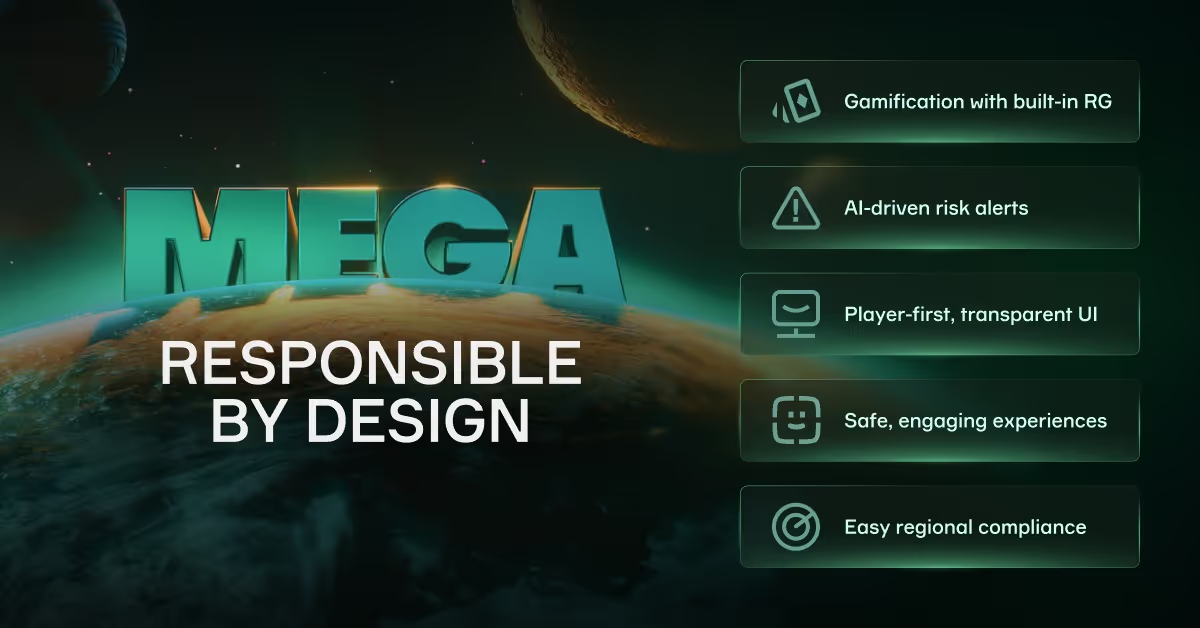
For Soft2Bet, gamification is more than a marketing tactic - it’s a strategic design pillar that drives growth as part of a dynamic, modular engine that turns players into engaged customers and, often, advocates for the product.
The reason for its success is that it steeped concepts such as adaptability, and in-depth design that takes account of players’ motivations by purpose, challenge, status, community and reward.
What also sets MEGA apart is its design philosophy. Rather than being a bolt-on feature, MEGA is a deeply integrated ecosystem designed around the science of motivation. Built from the ground up to engage players at an emotional level, it allows brands to craft experiences that evolve, personalise and continually re-engage users across key touchpoints.
MEGA’s architecture is entirely customisable, meaning operators can tailor the experience to different player segments, regulatory markets and business goals. The user interface is also designed to provide players with total control over their gaming experience. Personalised missions and challenges evolve dynamically based on their behaviour and preferences, adapting in real time to offer just the right level of difficulty and reward to keep users in the optimal engagement zone. Completing challenges unlocks achievements, which not only deliver tangible rewards but also provide a strong sense of progression.
Players can also choose and upgrade avatars, which become a visual representation of their status and investment in the platform. These avatars can evolve with the player’s activity, unlocking special powers, access, or social perks. This isn’t superficial, this visual ownership deepens emotional connections and makes players more likely to return. The result is that players don’t just log in to play, they log on to progress and engage with MEGA.
Human motivation is not purely individual. It’s also social. MEGA understands this and integrates social layers directly into the gameplay experience. Features such as leaderboards, live chat, team missions, and community challenges create a rich social environment where players feel part of something bigger.
Meanwhile, live chat and team-based features foster real-time interaction, friendship, and competition. Players can collaborate, celebrate each other’s wins, or engage in friendly rivalry. This social fabric leads to more time on site, more deposits, and stronger brand loyalty.
In an era where community and shared experiences are crucial to digital success, MEGA’s social capabilities are a powerful growth lever.
Too many iGaming brands rely on promotions, bonuses and cashback schemes to drive user acquisition and retention. While these tactics may boost short-term metrics, they often result in low-quality traffic, bonus hunters, and high churn rates.
This race to the bottom is unsustainable, both financially and reputationally.
Sofft2Bet and the MEGA platform take a different route with content-driven growth. By making the gameplay more rewarding, immersive, and sticky, MEGA reduces the need for bonus-heavy marketing. Users stay because they’re engaged with quality gamified content, not because they’re being provided with bonuses.
This shift in strategy leads to repeat visits, and longer customer retention cycles. It also aligns better with the evolving regulatory landscape, which discourages aggressive promotional tactics and mandates greater consumer protection.
Design has always been a silent but powerful influencer of user behaviour, helping companies nudge users and customers towards certain sections of websites and apps and influencing the way they interact with brands online. In the iGaming sector, thoughtful online casino or sports betting design of course plays a strong part in helping operators develop commercially.
It can also be used to guide players towards safer interactions, reinforcing player protection measures and encouraging them to take a time out or set new deposit or loss limits.
Design features enhance RG
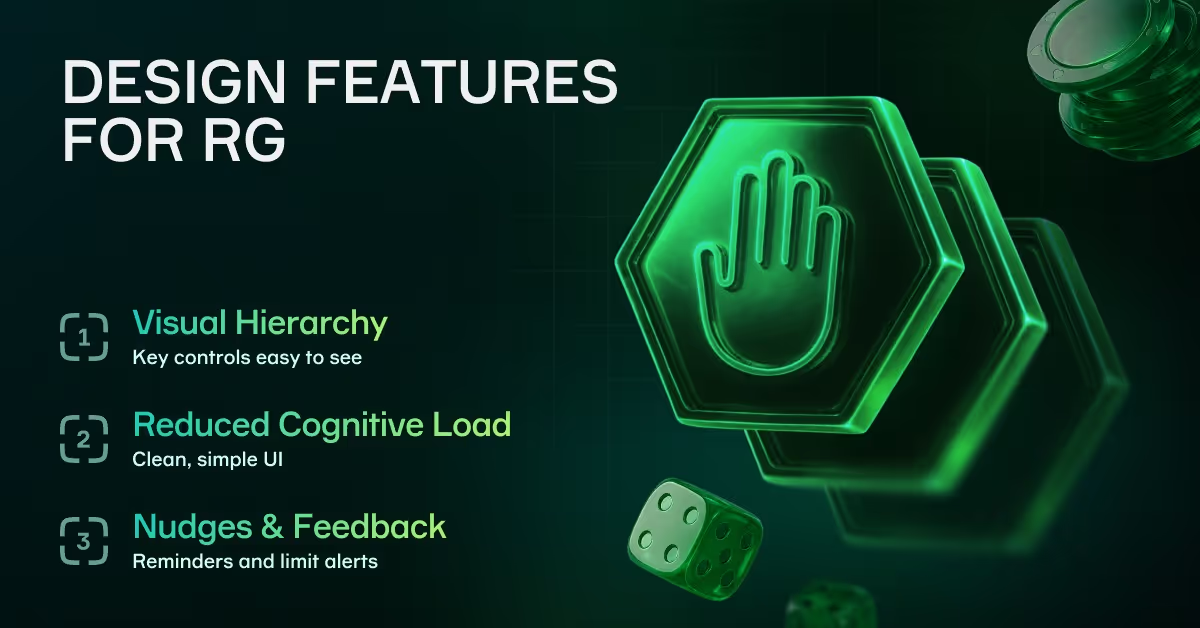
Features integrated into the design of user interfaces can play major roles in influencing the way players behave, the amount they spend and the speed (aka velocity, one of the key indicators of potential problem gambling) at which they play.
The aim is to encourage safe play while optimising growth opportunities through customer interactions, gamified content - such as MEGA - that does not rely on bonuses or promotions, and build business models that can be sustained over the long term.
Here are some design features that Soft2Bet harnesses to reach those goals:
By focusing the design on players and their habits, operators can strengthen their messaging with their customers. They can also transform social and corporate responsibility from a regulatory requirement into an engaging part of the gaming experience.
Marketing is often described as the ‘lifeblood’ of iGaming and one of the rewards of market regulation. Indeed, when operators gain licensed access to regulated markets, they, rightly, contribute taxes on their revenues to the governments of the countries they operate in. In return however they are usually allowed to advertise on mainstream news outlets or TV channels, sponsor football teams or advertise their brands on stadium hoardings. This activity encourages players to visit licensed websites and enable legal operators to recoup much of the traffic within a legalised jurisdiction.
This set up also shows how harnessing responsible gambling and iGaming marketing can benefit operators. Marketing usually aims to attract and retain players, while RG focuses on player protection, the two disciplines can be connected to boost companies’ brands and the image of the industry.
Whether it’s by combining humour or clever messaging that attracts customers without resorting to financial or personal gain with strong branding, modern iGaming marketing strategies that integrate RG with strong communications can drive brand loyalty and long-term retention.
Indeed, when players trust an operator, feel safe and feel like the website they are playing on prioritises their well-being, they are more likely to remain active and satisfied. In other words, responsible gambling can drive customer retention and improve a brand’s reputation and standing.
Responsible gambling and related areas such as regulatory compliance and licensing requirements are no longer checkboxes, they are now designed into operators' logos, user interfaces and corporate branding. Today they represent core components of modern iGaming marketing and communications strategies.
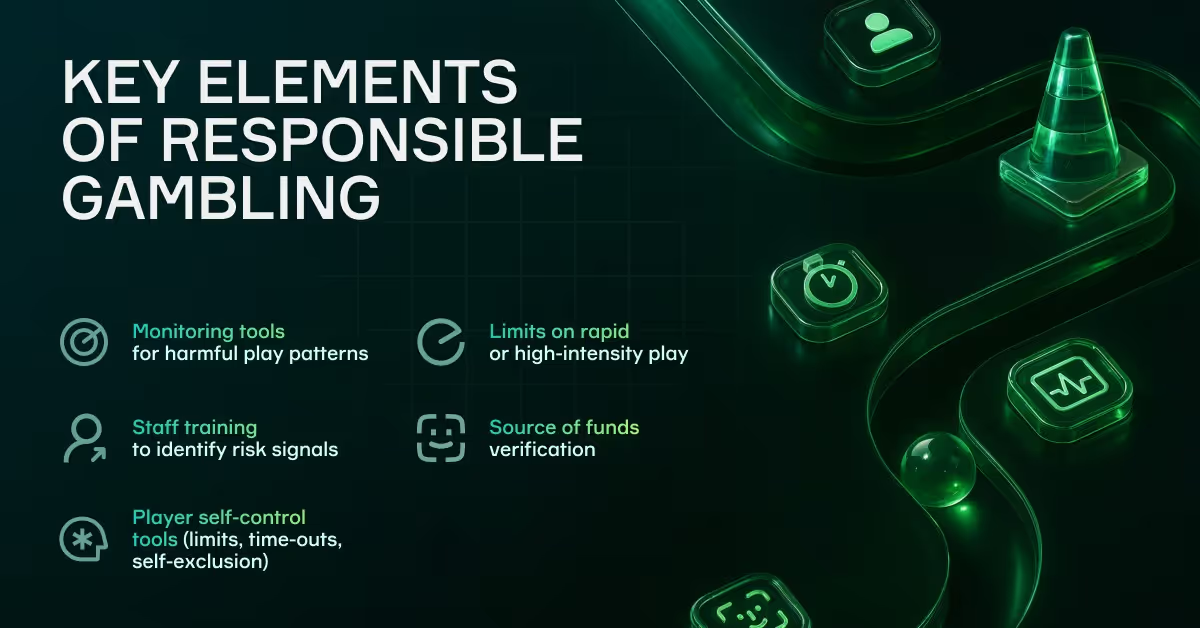
A strong responsible gambling policy requires both well-defined principles and the technological means to implement them. The following are key responsible gambling tools that every operator should consider integrating into their platform and casino UI design.
When implemented thoughtfully, these RG tools enhance both compliance and user experience within well-designed iGaming ecosystems. They also act as reflections on a business philosophy; whether it is grounded in sustainable, long term strategic objective that relies on transparency and trusts its processes; or whether it chases short term gains at the cost of player protection and providing a safe and secured environment for its players.
Promoting responsible gambling through design is a sound business strategy and enhances the iGaming industry’s reputation. By embedding RG practices in every stage of product development, from design to marketing, operators can achieve compliance, trust and long-term customer retention.
Design plays a key role in how the general public views the look and feel of iGaming brands, but integrating strong design elements also promotes commercial growth within sustainable business models. Indeed, operators that rely on short term gains from players that are not vetted or monitored often don’t last. This is equally relevant for regulated companies as it is for those operating with licenses. A transparent RG policy, supported by effective tools and partnerships with responsible gambling services providers, forms the foundation of sustainable growth.
In addition, with marketing and advertising being such key platforms upon which operators can build their brands and develop their business, it is imperative that they communicate in ways that adhere to local regulatory guidelines and, if possible, show that they are original and imaginative in how they attract and get players to open accounts on their websites.
As a major iGaming provider, Soft2Bet aims to follow all those guidelines and best practice initiatives and its strategic roadmap is set out to incorporate as many of those elements as possible. On the product front, our MEGA platform is also an example of how design, technology and ethics can converge to support both players while developing operators’ commercial horizons.
Quality content that is engaging and drives interactions with players is a great way to not only increase screen time and volumes, it also generates commercial growth in a highly cost effective manner. By reducing dependency on bonuses and promotions that eat into marketing budgets, MEGA drives revenues straight to operators' bottom and also help them avoid attracting players who often are only interested in bonuses.
As part of MEGA’s engagement drivers, players are also able to increase their loyalty points by taking part in missions and challenges that they can then discuss or brag about with their friends and other players on leaderboards. The rise and success of MEGA in recent years is also proof that content-led gamification, when done right, can be more productive than costly marketing campaigns. In addition, showing that marketing responsible gambling, whether by directly encouraging players to control their gameplay or more subtly with a content-led product such as MEGA, is good corporate policy and drives growth.
In addition, intelligent, visually-appealing design acts as the glue that binds business elements such as product development, responsible gambling, customer service and marketing. The often-heard mantra within iGaming is that innovation will be the future of the industry, but responsible gambling in combination with strong design can also be the bridge that connects all those key components.
What is the primary goal of responsible gambling?
Responsible gambling (RG) is a set of principles and tools designed to ensure gaming remains a safe and enjoyable form of entertainment. It focuses on protecting players from harm while maintaining transparency, fairness, and ethical standards.
How does smart design improve player safety?
Thoughtful design uses visual hierarchy and subtle "nudges" to guide players toward control tools like session timers and deposit limits. By simplifying the user interface, operators can reduce cognitive load and discourage impulsive behavior.
Why is content-led growth better than offering bonuses?
Relying on bonuses often attracts low-quality traffic and leads to high churn rates. Content-driven gamification, such as Soft2Bet’s MEGA, fosters deeper emotional engagement and long-term retention through immersive gameplay and social features.
What tools are essential for a strong RG policy?
Operators should implement features like deposit limits, session timers, and automated behavioral monitoring to identify at-risk patterns. Providing easy access to self-exclusion mechanisms and support resources is also a critical regulatory requirement.
.svg)
.svg)



.png)


%20(1).png)