


The global online gambling market continues to experience substantial growth, driven by regulatory developments across North America, Latin America, and emerging European regions. As 2026 approaches, entrepreneurs face unprecedented opportunities in newly regulated jurisdictions from Ontario to Brazil, combined with maturing crypto-casino segments and AI-driven personalization technologies. This comprehensive guide delivers data-driven insights on platform selection, licensing strategies, and realistic financial projections. Whether you're targeting regulated EU markets or crypto-friendly jurisdictions, understanding your platform infrastructure choice represents 60% of your operational success. With startup costs ranging from $50,000 to $500,000+ and break-even timelines of 12-24 months, strategic platform selection directly impacts your ROI trajectory and market competitiveness.

An online casino platform is the comprehensive B2B software infrastructure that powers internet gambling operations. Think of it as your complete technological backbone.
Core components include:
2025-2026 Platform Evolution:
Why does platform choice matter so much? Industry data shows that technical infrastructure directly impacts player acquisition costs, retention rates, and lifetime value. A robust platform with 10,000+ games reduces marketing spend through superior content variety. Seamless payment processing (under 24-hour payouts) improves satisfaction and reduces churn by 25-40%.
Warning: Switching platforms later costs $100K-$300K+ and may results in 20-40% player attrition. The decision you make at launch is expensive to reverse.
Platform selection is your most consequential business decision. Unlike marketing strategies you can iterate quickly, platform infrastructure locks you in–switching later may costs $100K-$300K+ and results in users churn. This framework guides systematic platform evaluation based on your specific business situation.
Before evaluating platforms, answer fundamental business questions that determine platform requirements:
Jurisdiction Impact on Platform Choice:
UK/Sweden operations (UKGC, Spelinspektionen) require platforms with stringent compliance tools to excel, with mandatory responsible gambling features, comprehensive audit trails, and regulatory liaison support. Offshore licences, such as the ones offered in Curacao, offers broader platform compatibility at lower costs, acceptable for testing business models. Emerging markets (Ontario, Colombia, Brazil) need platforms with flexibility to adapt to evolving regulations provide advantages through local payment methods and regional expertise.
Business Model Options:
💡 Pro Tip: Choose platforms with multi-jurisdiction capabilities if uncertain about licensing strategy—modular approach enables starting in one market and expanding without platform migration.
Minimum Viable Portfolio Requirements:
Platforms unable to provide tier-1 content place operators at severe competitive disadvantages. However, quantity alone proves insufficient–game portfolio quality and regional relevance matter equally.
Live dealer quality emerged as critical retention driver through operator interviews. Platforms with direct gaming integration demonstrated higher player retention than those relying on smaller live casino suppliers. Professional dealers, multiple camera angles, smooth streaming, and game variety (blackjack, roulette, baccarat, game shows) directly impact player engagement and lifetime value.
Tip: Exclusive or early-access content provides competitive advantages. Platforms offering early release of new games (2-4 weeks before competitors) enable operators to market exclusive content, attracting players from competitors with identical game portfolios.
Compliance capabilities represent existential importance–weak compliance infrastructure leads to regulatory penalties, license suspension, or complete business closure. Evaluate platforms across multiple compliance dimensions:
Essential Compliance Capabilities:
Platforms designed for regulated markets include these features as standard. Those focused on loosely regulated jurisdictions often treat responsible gambling as afterthought, creating expensive gaps when entering regulated markets.
Real-World Warning: One major operator lost their Swedish license in 2024 due to inadequate responsible gambling tools, resulting in complete market exit and $50M+ revenue loss. Platform compliance capabilities directly protect business continuity. UK Gambling Commission increased enforcement actions 40% in 2024, Sweden's Spelinspektionen levied record fines, and Netherlands' KSA maintained aggressive licensing enforcement.
Never choose a platform without hands-on demo access. Marketing materials showcase idealized experiences; actual operator dashboards reveal daily operational reality. Request full back-office demonstrations from 3-5 shortlisted platforms, dedicating 2-3 hours per demo to thoroughly test functionality. You'll spend hours daily in these interfaces–clunky backend design costs significant staff time at scale.
Comprehensive Demo Checklist:
Casino operations run 24/7/365, making rapid technical support essential rather than optional. Platform downtime during peak hours (evenings, weekends) costs thousands in lost revenue per hour.
Critical Support Requirements:
Request SLA documentation rather than accepting verbal commitments. Documented SLAs with penalty clauses demonstrate platform confidence in support capabilities. During demos, ask specific technical questions: How would you debug a game loading failure? What process handles payment processor failover? Strong support teams answer confidently with specific processes; weak support hesitates or provides generic answers.
Platform vendor marketing materials showcase best-case scenarios; real operator experiences reveal actual capabilities and limitations. Comprehensive due diligence should include multiple feedback sources to triangulate accurate platform assessment.
Due Diligence Sources:
Prepare specific questions before reference calls: What was actual setup timeline vs promised? What unexpected costs emerged? How responsive is technical support for urgent issues? What limitations have you encountered? Would you choose this platform again? Operators facing similar challenges provide most relevant insights.
Warning Signs of Fake Reviews:
Authentic feedback includes specific operational examples, balanced assessments mentioning both strengths and weaknesses, reviewer identifiable as actual operator, reviews spanning extended time periods, and constructive criticism alongside praise. If an operator appears highly rated on one site but poorly rated elsewhere, investigate discrepancies before drawing conclusions.
Platform choice represents only one component of casino business success, though a foundational one. Even the most sophisticated platform cannot compensate for inadequate licensing, dysfunctional payment processing, or unsustainable player acquisition economics. The following sections examine critical success factors beyond platform selection that determine whether your casino operation thrives or fails.
Gambling license selection shapes your operational framework, target markets, compliance costs, and brand credibility. Each jurisdiction offers distinct tradeoffs.
Licensing Strategy Tips:
Payment processing is one of the most challenging operational aspects–far more complex than first-time operators anticipate.
Key challenges:
Cryptocurrency advantages:
Best practice: Implement crypto alongside traditional payments rather than crypto-only, providing player choice while maintaining banking redundancy.
Payout speed impact:
Industry data shows 24-hour withdrawal processing correlates with 30-40% higher player retention than 3-5 day traditional bank transfers. Instant withdrawals for verified VIP players represent competitive differentiator in 2026.
Player acquisition is the largest cost center for online casinos, consistently underestimated by first-time operators who focus on platform costs while treating marketing as afterthought.
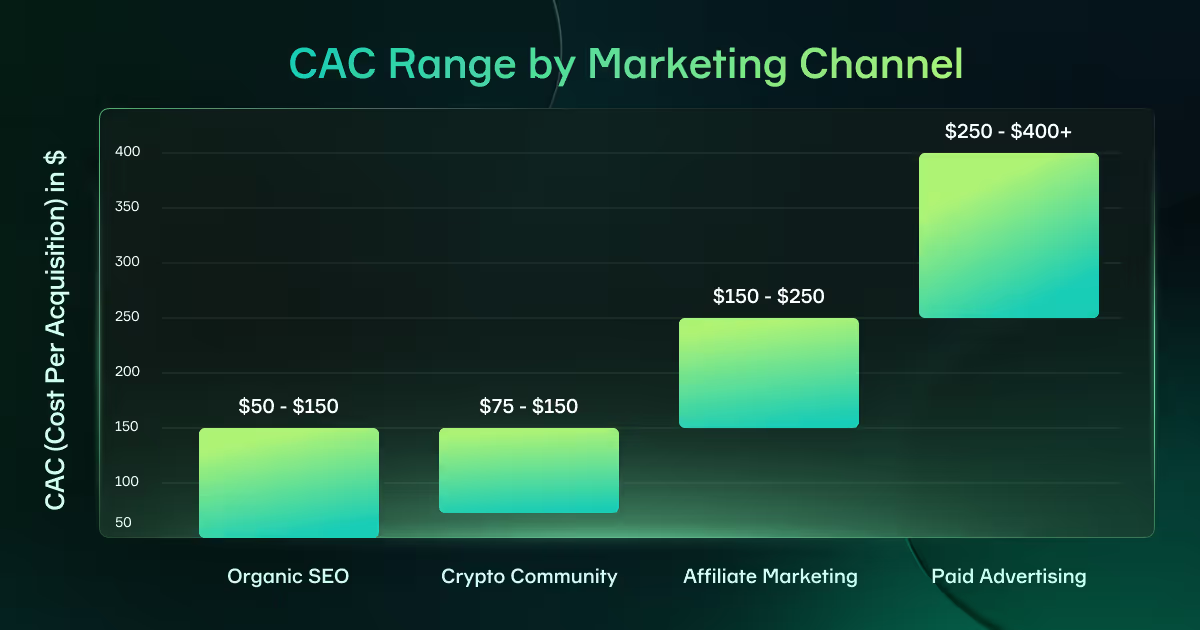
First deposit bonus costs:
Industry-standard welcome bonuses (100-200% match up to $500-$1,000) cost approximately $300-$400 in expected value after wagering requirements. Combined with CAC, acquiring single player costs $400-$700 including acquisition and bonus. This requires strong player lifetime value (ideally $800-$1,500+) to achieve profitability.
Retention marketing importance:
Realistic timeline expectations:
Maintain adequate capital reserves (minimum 18-24 months operational expenses) to survive initial unprofitable period. Undercapitalization is the primary reason for casino failures.
*This article is intended for informational and educational purposes only. It does not constitute legal, financial, or investment advice. Readers should consult relevant regulatory authorities or advisors before making operational decisions.
What are the estimated startup costs and profitability timelines?
Initial costs range from $50,000 to over $500,000 depending on the business model. Most operators reach a break-even point within 12 to 24 months of launching.
Why is platform selection considered a critical decision?
The platform serves as the technological backbone and accounts for roughly 60% of operational success. Switching providers later is difficult, costing up to $300,000 and causing significant player loss.
Which licensing jurisdictions are recommended for new operators?
Curacao is ideal for testing business models and crypto operations due to lower costs and faster setup. MGA Malta and the UKGC provide higher credibility but require much larger compliance investments.
How much does it cost to acquire a single player?
Between marketing and deposit bonuses, acquiring one player typically costs between $400 and $700. Success depends on achieving a player lifetime value of $800 to $1,500.
.svg)
.svg)



.png)


.png)
.png)
.png)