


.avif)
The evolution of the digital gambling industry has fundamentally reshaped how online casinos operate, interact with customers and how they manage enormous volumes of sensitive data. These factors also explain why cybersecurity has become even more important to the workings of operators.
Over the past decade, online gambling platforms have expanded across continents, adopted cloud-driven architectures, integrated real-time data analytics, and begun relying heavily on third-party suppliers to support modern gaming ecosystems.
With this rapid transformation, the role of cybersecurity has shifted: from being a ‘traditional’ responsibility to becoming a core strategic requirement. Every reputable iGaming operator, platform provider and B2B partner now depends on sophisticated cybersecurity frameworks: not only to safeguard financial operations, but also to comply with what can sometimes be complex regulatory environments and maintain the trust of millions of global players.
Cyber-threats targeting gambling platforms have always existed, but they have now grown more aggressive and technically advanced as attackers exploit new markets and expand their digital footprints to target legacy infrastructure and vulnerabilities. At the same time, regulatory expectations continue to be high, requiring stronger data protection measures and ID verification measures, operational transparency, while secure payment processing is indispensable to any operator wanting to be fully trusted by players.
This is because a single security breach can result in a whole catalog of negative consequences: financial losses, operational downtime, reputational damage, players leaving or switching accounts and significant regulatory penalties. Because online gambling platforms operate around the clock and manage real-time financial transactions, their exposure is constant and responsibilities, towards customers, regulators and providers, are immense.
As mentioned, cybersecurity has a long history in online casino and as it enables operators to defend themselves against threats and attacks, being able to rely on a robust cybersecurity framework is key to achieving long-term operational resilience.
Today’s online gambling platforms operate within an exceptionally complex digital ecosystem. Operators often manage omnichannel environments that include mobile apps, desktop platforms, live dealer streams, affiliate networks, multiple payment integrations, global player bases and diverse regulatory jurisdictions.
With each additional integration, whether via APIs or third-party vendors, the attack surface expands and with it, the potential avenues for exploitation, threats and, sometimes, successful extortion demands. The result is a high-risk environment in which cybersecurity is no longer optional but absolutely fundamental for ensuring stability, compliance and customer confidence.
One of the primary reasons cybersecurity has become indispensable is the financial nature of iGaming. With thousands of transactions occurring every minute, ranging from player deposits to wagers and withdrawals, casinos become extremely attractive targets for financial fraud. Cybercriminals frequently attempt, and are often successful in, taking over accounts, bonus abuses, stealing user identity details and fraudulent transactions that they will then try to sell them on cybersecurity or dark web forums. Without robust authentication systems, fraud detection tools and secure payment workflows, these activities can quickly escalate into significant financial losses.
Another critical area is data protection. Online casinos collect extensive personal (and sensitive) information during player onboarding processes and ongoing account activity. This includes identity documents, financial records, geolocation data, behavioural analytics, device fingerprints, and more. Such information is highly valuable on the black market, making casino platforms attractive targets for data breaches. Strong encryption, secure communication protocols and strict access controls are therefore mandatory, not only for security but to comply with GDPR, CCPA and other international privacy frameworks.
For example, in 2022, a popular online sports betting company suffered a data breach, which resulted in a database containing the personal information of approximately 1.5 million customers being sold on the black market. The compromised data included names, email addresses, postal addresses, phone numbers, dates of birth, Social Security numbers, account identifiers, and transaction-related information. The attackers used previously leaked credentials to gain access to user accounts, obtain sensitive personal data, and withdraw hundreds of thousands of dollars from victims’ accounts.
Brand reputation plays a major role in motivating strong cybersecurity practices. Player trust is one of the most essential components of long-term business sustainability, and trust will erode rapidly after a security incident and is incredibly hard to win back. A single breach, even if contained, can leave lasting damage. For an operator competing in a saturated market, this can translate into player migration to better-secured competitors and long-term revenue decline.
In short, the growing attack surface, increased sophistication of cybercriminals, strict regulatory expectations and high value of player data and financial transactions make cybersecurity a cornerstone of modern casino operations.
As online gambling has expanded globally, the technological environment underlying modern casino platforms has become more complex. Operators increasingly rely on cloud infrastructure, microservices, live gaming servers, mobile apps, real-time data feeds, affiliate tracking systems and multi-tenant architectures that support dozens of brands within a single platform. While these advancements deliver flexibility and scalability, they also introduce new cybersecurity risks.
High-traffic events such as major sports tournaments, casino promotions or progressive jackpots create peak loads that attackers can exploit. Cloud environments, while secure when properly configured, can become vulnerable due to misconfigurations, insufficient monitoring, weak API security or poorly managed access controls. In addition, international activities require handling data from multiple jurisdictions, each with its own regulatory rules governing storage, transfer and reporting.
As operators scale, the need for continuous monitoring, rapid threat detection and analytics becomes increasingly important. Cybersecurity is not static as it evolves in real time alongside platform growth and industry demands.
.avif)
The gambling industry is a prime target for cyber criminals due to its continuous cash flow, the sensitivity of stored personal data and the value of uninterrupted operations. While the threats are diverse, several attack categories remain consistently prominent and dangerous.
Most regulatory authorities around the world view cybersecurity as a key feature of fair, safe, and compliant gambling operations. As a result, operators must satisfy a wide range of requirements that address data protection, payment integrity, operational resilience, and platform security.
Data protection frameworks such as GDPR and CCPA impose strict rules governing data storage, encryption, access, and breach notification timelines. Regulators in the gambling sector, in Malta, Denmark, Greece, Ireland, Italy, Mexico, Ontario (Canada), Romania, Spain and Sweden have integrated cybersecurity into their licensing processes. They expect operators to demonstrate secure payment processing, robust identity verification, RNG protection, and real-time system monitoring.
Payment security is another critical area. Compliance with Payment Card Industry Data Security Standard (PCI DSS) requires operators to secure cardholder data through tokenization, network segmentation and continuous vulnerability scanning. As operators increasingly use cloud infrastructure, they must also adopt cloud-specific security controls, including secure APIs, multi-region redundancy and strict configuration management.
Ultimately, regulatory alignment strengthens compliance, operational resilience and player trust. A strong cybersecurity program can be a deciding factor in license renewals or market expansions.
An efficient cybersecurity strategy requires a combination of technology, policy and organisation. Several components form the backbone of a secure casino environment.
Identity and access management is one of the most important pillars. Multi-Factor Authentication (MFA), role-based permissions and strictly privileged accounts ensure that only authorised individuals access sensitive systems. These protections significantly reduce the risk of unauthorised intrusion or malicious activities.
Fraud prevention is closely intertwined with cybersecurity, as both aim to protect the integrity of transactions, player identity, and platform behavior. Effective fraud prevention systems rely on machine learning models, behavioural analysis and geolocation tracking to identify suspicious activity. These tools help detect fraudulent deposits, manipulated bonuses, collusion and multi-accounting.
Player data protection is also a central responsibility. Robust governance ensures compliance with data protection laws while reducing the risk of identity theft or account manipulation. Responsible gaming initiatives further benefit from secure identity verification, self-exclusion processes, and tamper-proof player behavior analysis.
Secure payment controls such as PCI encryption protect financial data during deposits and withdrawals. Together, these measures build player trust and reinforce long-term customer loyalty.
A resilient cybersecurity environment cannot rely solely on technology. It requires a strong organisational culture, clear governance and well-defined processes. Leadership must take accountability for security strategy, risk assessments and compliance obligations. Employees at all levels should receive regular training to recognise phishing attempts, handle data responsibly and follow secure operational practices.
Third-party vendors can also introduce risk, depending on the security settings they have in place within their technical infrastructures. Operators must evaluate partners for security maturity, require compliance certifications and continuously monitor integration points. Practice runs that cover ‘DevSecOps’ also strengthen resilience by embedding security protocols into development lifecycles, ensuring that vulnerabilities are identified during design rather than after deployment.
Many operators also turn to professional cybersecurity services for support, including managed detection, compliance audits, security architecture reviews and response. These services provide expertise and scale, helping operators maintain continuous protection even as threats evolve.
In the highly regulated and risk-sensitive niche of iGaming, platform security and user trust are non-negotiable and Soft2Bet approaches these topics with the utmost seriousness. From architecture to behavioural controls to user interface designs, security is deeply integrated and embedded within our platform. Motivational Engineering Gaming Application (MEGA), our industry-leading gamification solution, also playing an important role in reducing fraud and reinforcing healthy user flows.
Underpinning Soft2Bet is a modern, cloud-based architecture that emphasises security and scalability: the customer data points that are delivered by our platform components also act as extra indicators and strengthen our security systems against fraud, identity theft or bonus abuse.
Analysis of the data points allows our systems to detect suspicious activity and flag it quickly, thus enabling our teams to take decisive action in a timely manner. Sensitive information such as identity documents and financial transactions is handled with strong encryption protocols and we adhere to relevant data-protection regulations across jurisdictions, including compliance with strong data protection standards such as GDPR in Europe.
The continuous monitoring provides reliable information to Soft2Bet and its partners and allows us to monitor its security settings in real-time. This enables the detection of anomalies in infrastructure usage, user activity or payment flows.
Cybersecurity can also contribute to enhancing ethical play, fairness and player protection. Soft2Bet embeds responsible gambling (RG) features deeply into its platform as part of its risk-control framework and, thanks to the gamified content we provide our players with over weeks and months, we are able to adopt a long-term view of their activities and behaviours.
Player protection tools include self-exclusion and session-time alerts, but also strengthen Soft2Bet’s cybersecurity setup by providing regular and consistent data that gives a full picture of pliers activities and gives them the ability to manage their own usage and reduce the risk of harmful gambling.
Behind the scenes, behaviour monitoring and compliance teams collaborate to track atypical betting patterns and intervene when needed and combine with our cybersecurity experts to maintain behavioural safeguards and user empowerment.
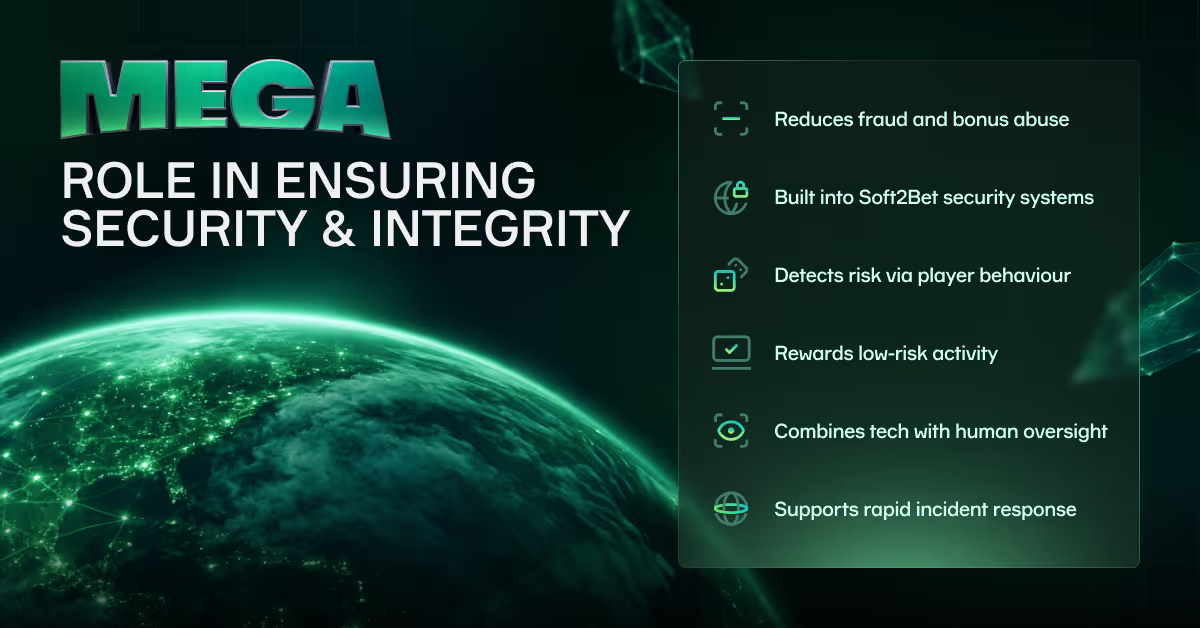
Soft2Bet’s security and fraud-prevention framework is also significantly enhanced by MEGA. This is because ‘traditional’ iGaming marketing often relies on aggressive bonuses and sporadic promotions that can invite fraud, bonus abuse, multi-accounting or collusion. Although mainly a gamification and player engagement solution that is designed to boost user retention and lifetime values, MEGA contributes meaningfully to Soft2Bet’s security and fraud-prevention framework because it shifts value toward progress, missions and long-term engagement. By rewarding consistent play, progression, and project-based milestones, MEGA reduces the incentive for opportunistic abuse aimed at short-term profit.
And because the solution is integrated into the same technology stack and user-account management backend as Soft2Bet’s security technology, adjustments to eligibility rules, rewards and device reputation can be made swiftly. By aligning design with infrastructure security, Soft2Bet protects itself and all its partners against fraud and cybersecurity risks, at the same time as it maintains a fun experience for genuine players.
In addition, MEGA’s behavioural and cohort segmentation feeds back into Soft2Bet’s risk-detection systems and rewards consistent, low-risk behaviour, while flagging accounts that show rapid spikes or erratic patterns. By doing this, MEGA becomes part of the behavioural-analytics loop and blends engagement and security into a unified system.
Automation and technology are powerful, but Soft2Bet’s focus on human oversight remains non-negotiable. The compliance and risk-detection functions, product teams, legal and operations all work closely together. For example, when a risk signal arises, analysts validate automated flags, legal teams assess regulatory requirements, the product team will adjust platform parameters, while support teams will manage communications with players.
Staff training is an ongoing process, with employees receiving regular training on RG, AML, fraud detection and compliance to ensure all our staff are aligned on internal policies and external obligations.
This approach could be described as “people + process + product” and ensures that cybersecurity and integrity procedures are active and embedded practices in our daily operations.
This balanced approach matters. The iGaming industry is often under scrutiny and it is therefore vital that stakeholders integrate all these player safety and RG components with their strongest cybersecurity and compliance infrastructures. Such a set up goes beyond simply meeting their regulatory obligations, it shows how seriously the leading companies in iGaming take these matters.
And because cybersecurity, compliance, product design and behavioural controls are unified under one roof throughout our systems and with MEGA, Soft2Bet is agile and able to respond to emerging threats, adapt to changing regulatory requirements across jurisdictions, and iterate product features quickly, all without compromising security or integrity.
No matter how sophisticated an operator’s defensive systems are, incidents can occur. Effective incident response strategies ensure organisations can react decisively and limit damage. A mature response framework includes rapid detection mechanisms, structured escalation processes, clear communication flows and precise containment procedures. After a threat is detected and neutralised, system recovery and regulatory reporting follow, along with a detailed post-incident review to prevent recurrence.
Disaster recovery complements incident responses by ensuring business continuity. Redundant infrastructure, frequent backups, defined recovery time objectives and automated failover mechanisms enable operators to resume operations quickly - even in the event of severe system failures. These capabilities protect revenue and operations, but also strengthen regulatory and player confidence.
The cybersecurity landscape is evolving rapidly, and the online gambling industry continues to adapt new threats and technologies to combat them. AI will continue to play a growing and important role in automated threat detection systems. Cloud environments will require increasingly sophisticated controls, including microsegmentation, secure container orchestration and adaptive access models.
Zero trust architectures, which are frameworks that assume no user or device can be trusted by default and require strict verification for every access request, are poised to become standard requirements. These new systems will eliminate assumptions of trust within internal networks and enforce identity-centric verification for every action, the future may also see a need for what is called quantum-resistant encryption to address the threat that quantum computing can present to traditional cryptographic models.
Regulatory frameworks focus on data governance, cross-border transfers, responsible gaming protections and operational resilience. Operators that invest early in modern cybersecurity frameworks will be better positioned to maintain compliance and competitive advantage as the regulations evolve.
Cybersecurity has become one of the defining pillars of modern online gambling and protects all stakeholders: operators, players, partners; along with regulators and those working in the financial, operational and reputational risk sectors. As the industry continues to expand and technological complexity grows, these trends are further reasons why operators must adopt comprehensive cybersecurity frameworks that address prevention, detection, response, compliance and long-term resilience.
Strong cybersecurity safeguards iGaming operators and providers and all who work in the space, but they also strengthen brand reputation, regulatory compliance and player trust, which are three essential elements for sustainable success. While technologies and regulatory environments will continue to change, the overarching goal remains constant: to maintain a secure, transparent, and trustworthy gaming ecosystem for all stakeholders.
What are the most common cyber-threats for iGaming companies?
How do iGaming companies protect themselves against cyber-threats?
Why is it important for iGaming companies to protect themselves against cyber-threats?
How do you train iGaming staff to be cognisant of cyber-threats?
.svg)
.svg)



.png)




.avif)